- By Phoenix Roofing and Solar
- Uncategorized
- 0 Comment
Common Roofing Problems in Elyria, Ohio: A Local Contractor’s Guide
Key Takeaways
Elyria homeowners face roof damage from all four seasons: high winds, hail, heavy snow, ice dams, and 20–40 freeze-thaw cycles per winter that gradually break down shingles, flashing, and sealants.
The most common roofing problems in Elyria include missing or damaged shingles, roof leaks around chimneys and vents, ice dam roof damage, poor attic ventilation, aging shingles with granule loss, clogged gutters, and hidden storm damage.
Many problems are not obvious from the ground. A professional roof inspection can catch hidden roof damage before it leads to costly repairs to drywall, insulation, or structural framing.
Phoenix Roofing & Solar is an experienced roofing contractor serving Elyria and Lorain County, specializing in roof repair, roof replacement, storm damage repairs, and roof inspections.
If you notice warning signs like water stains, missing shingles, granules filling your gutters, or ice dams forming along your eaves, schedule a local roof inspection rather than waiting for a major leak.
Introduction: Why Roofing Problems Are So Common in Elyria
Homes in Elyria, OH deal with roofing stresses that most parts of the country never experience all at once. Northeast Ohio delivers spring thunderstorms, summer heat and humidity, fall windstorms, and then months of heavy lake-effect snow and ice. Each season chips away at your roofing system in a different way.
These conditions lead to specific, recurring issues: missing or damaged shingles from wind events, leaky roofs around chimneys and skylights, ice dams along roof edges, worn-out asphalt shingles losing their protective granules, damaged flashing letting water seep in, and gutter overflow causing interior damage. Overall roof health depends on shingles, flashing, underlayment, ventilation, insulation, and drainage all working together.
This article walks Elyria homeowners through the most common roofing problems, how to spot them early, when to call a roofer, and how regular roof inspections and maintenance can prevent expensive repairs. Everything here is written from the perspective of an experienced local roofing contractor who regularly inspects and repairs roofs across Elyria and Lorain County.
Why Elyria Homes Develop Roofing Problems
Homeowners in Elyria, Ohio face severe roof stress from winter snow and high winds, but the damage doesn’t come from a single event. Cold winters and humid summers accelerate roof aging in Elyria through a relentless cycle of expansion and contraction that no roofing material can fully escape.
Freeze-thaw cycles are one of the biggest culprits. Northeast Ohio sees roughly 20–40 freeze-thaw cycles each winter. Water from rain or snowmelt seeps into tiny cracks, freezes overnight and expands by about 9%, then melts during warmer daylight. Over a single season, this can loosen shingle seals, split flashing sealants, and open gaps around vents. Temperature swings can crack seals around chimneys, vents, and valleys, causing leaks that may not show up inside for months.
Heavy snow and ice pile weight on roofs, drift into valleys, and set the stage for ice dams that force meltwater under shingles. Strong winds and severe thunderstorms are common across Lorain County. Over the past decade, 255 damaging summer storm events were recorded across the Cleveland-Elyria metro area, including hail, wind, and tornadoes. High winds can lift and damage shingles in Elyria, especially along ridges and roof edges.
Hail impacts bruise asphalt shingles and crack vents, while falling tree limbs can puncture roofs or bend gutters. And aging roofing systems-those 20-plus-year-old asphalt shingle roofs with original flashing and outdated ventilation-are far less resilient to this weather. Repeated exposure over 10–25 years gradually deteriorates decking, underlayment, pipe boots, and other roofing components even when no single “big storm” seems responsible.
1. Missing, Lifted, or Creased Shingles
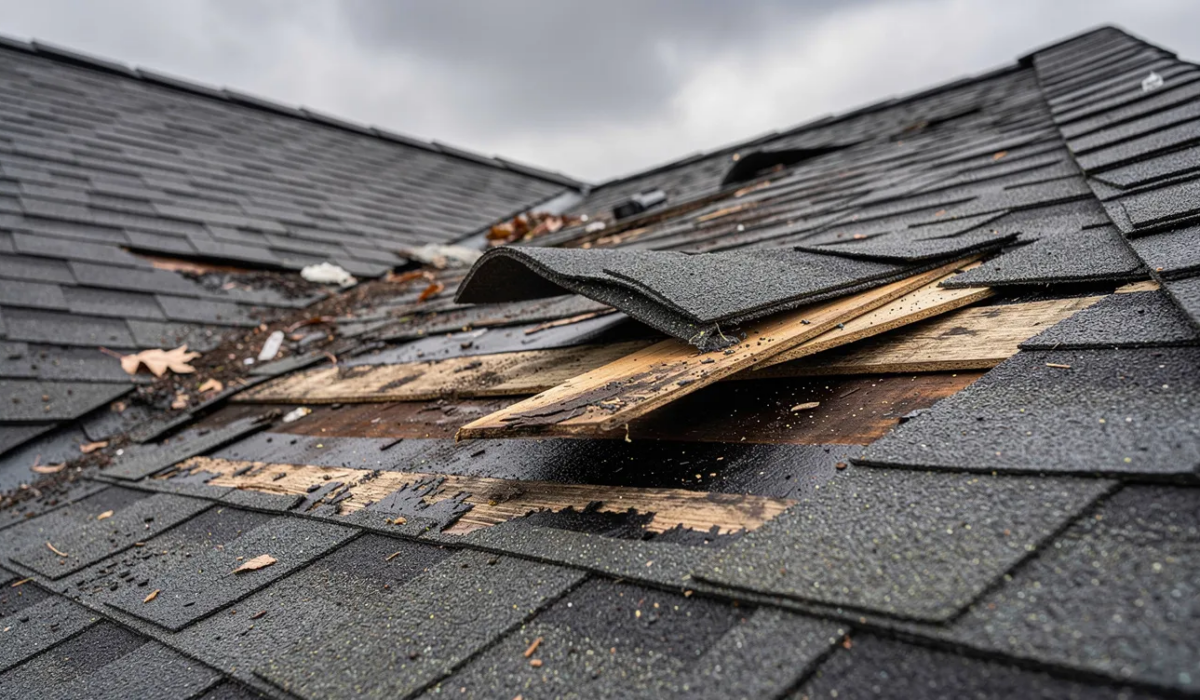
Strong winds can lift or tear away asphalt shingles, especially along edges and ridges. But what surprises many Elyria homeowners is that wind-damaged shingles can remain on the roof while still being compromised. Here’s what happens:
Wind uplift breaks the factory seal strip bonding each shingle to the one below it. The shingle may still sit in place but now lifts with every gust, allowing wind-driven rain underneath.
Missing shingles are the most obvious sign-you find pieces or whole tabs in your yard after a thunderstorm.
Creased shingles occur when turbulent wind folds a shingle upward and then presses it back down. The crease becomes a permanent weak point where water can enter and where the shingle may eventually crack.
Exposed underlayment or visible nail heads between shingles are clear signals that water intrusion is likely.
Homeowner examples to watch for: shingles scattered in the yard after a storm, edges flapping visibly on a windy day, or rows of shingles not lying flat on a south- or west-facing slope. Shingle damage like this can void manufacturer warranties if left unaddressed.
If you notice lifted or creased shingles, schedule a roof inspection rather than attempting a DIY fix. Crews need to check surrounding shingles, fasteners, and seal integrity-something that requires safety equipment and rooftop access.
2. Roof Leaks and Hidden Water Damage
A visible roof leak or ceiling stain in an Elyria home usually means the roofing system has been letting water in for some time. Roof leaks can lead to mold growth and damaged ceilings well before you ever see a drip.
Common leak locations include:
Chimneys – cracked mortar, failed step or counter flashing
Plumbing vents – deteriorated rubber boots and cracked collars
Valleys – concentrated water flow over compromised flashing
Skylights – sealant detachment and failing flashing
Roof-to-wall transitions – improperly overlapped flashing behind siding
Water stains on ceilings often indicate roof leaks, but the stain may appear in a hallway or closet far from the actual entry point. Water can travel along decking, rafters, and insulation before becoming visible inside. Early warning signs include faint yellow or brown spots on ceilings, peeling paint, musty smells in upstairs rooms, or damp insulation in the attic.
Prompt leak repair by a roofer in Elyria can prevent more extensive repairs to drywall, flooring, framing, and electrical components. An experienced roofing contractor will check both the roof surface and attic space to trace the true leak path instead of only patching the visible interior damage.
3. Chimney and Roof Flashing Failures
Flashing is thin metal-aluminum, galvanized steel, or copper-installed wherever the roof meets a chimney, wall, vent, or other penetration. It’s a critical component that keeps water out of joints, and flashing damage is a common source of roof leaks.
Step flashing and counter flashing around brick chimneys must be properly lapped and sealed. In older Elyria homes, reused or improperly overlapped flashing causes recurring leaks that no amount of caulk can permanently fix.
Roof-to-wall flashing and valley flashing fail frequently, especially when prior roof work relied on heavy roofing cement instead of proper metal installation.
Rust, corrosion, and failed sealants open small gaps that let wind-driven rain into the roof system during Lorain County thunderstorms.
Repeatedly applying caulk or “black tar” over problem areas is a temporary bandage, not a long-term solution, and it can hide more serious decking issues underneath. The right approach is to use modern waterproof sealants or install new metal flashing to prevent leaks permanently.
Have chimney flashing repair or shingle replacement around penetrations done by a qualified roofing company in Elyria that understands both current local building codes and how to work around existing masonry.
4. Ice Dams During Elyria Winters
Ice dams form when snow on the warmer upper roof melts, flows downhill, and refreezes at the colder eaves and in gutters. This creates a ridge of ice that traps additional meltwater behind it.
The underlying cause is heat loss from the living space into the attic. When insulation is thin or has gaps, and when poor ventilation keeps the attic warm, the roof deck above stays warmer than the eaves. Ice dams can force water under shingles, causing leaks that soak underlayment and decking. Ice dams can cause leaks especially on poorly insulated roofs, leading to peeling paint, stained ceilings, and mold growth inside walls.
Many older roofs in Elyria lack the ice and water shield coverage that current building standards recommend along eaves and valleys. Recurring ice dams are often a sign of bigger building-performance issues-air leaks, insulation gaps, ventilation problems-not just “too much snow.” They need to be evaluated along with the existing roof itself.
If you see large icicles, thick ice at gutters, or repeated winter leaks, request a roof inspection that includes attic ventilation and insulation checks. Addressing the root cause is the only way to break the cycle.
5. Poor Attic Ventilation
Attic ventilation matters year-round in Elyria’s climate. In summer, it controls heat buildup. In winter, it manages moisture. Without proper ventilation, both problems compound and shorten your roof’s life.
Here’s how the system works in simple terms:
Intake vents (usually at soffits) let cooler, drier air enter the attic from below.
Exhaust vents (ridge vents, box vents, or gable vents) let warm, moist air escape from the top.
When intake is blocked-often by insulation blown into soffit channels-the system fails. In summer, poor attic ventilation traps heat, baking shingles from below and leading to increased energy bills. Inadequate attic ventilation traps moisture and can accelerate shingle aging well before the manufacturer’s expected lifespan.
In winter, warm moist air from the living space condenses on cold roof decking, leading to moisture buildup, mold growth, and eventually soft or rotten sheathing. Poor ventilation also contributes to ice dams by keeping the upper roof too warm and the eaves too cold-a common pattern in Elyria and nearby communities like North Ridgeville and Amherst.
A proper roof inspection should include counting vents, checking soffit airflow, and confirming that intake and exhaust are balanced.
6. Aging Asphalt Shingles and Granule Loss
Asphalt shingles are the most common roofing material on Elyria homes. Elyria roofs typically last 20–25 years on average, but the specific lifespan depends on shingle type and installation quality:
3-tab asphalt shingles typically last 15–20 years in Elyria
Architectural shingles can last 25–30+ years in Elyria
Premium designer shingles can last 30–35 years with proper care
Metal roofing can last 40–70 years in Elyria
Visible aging signs include curling shingles (which indicate moisture buildup or aged asphalt), cracks across the shingle surface, brittle tabs that break when bent, and widespread color fading. Older asphalt shingles can lose granules, crack, and curl due to age and weather exposure.
Granule loss shows up as gritty sand accumulating in gutters or at downspout outlets, bare asphalt showing through, and smooth shiny spots. Some shedding is normal on new roofs, but heavy ongoing granule buildup signals an aging or damaged roofing system. UV exposure, temperature swings, and repeated storms accelerate deterioration, reducing the roof’s ability to protect against water intrusion and wind damage.
When granule loss, curling, and cracking are widespread-not isolated to a small area-it may be time to discuss roof replacement rather than continued spot repairs.
7. Wind, Hail, and Storm Damage on Elyria Roofs
Elyria and the rest of Lorain County experience strong thunderstorms, high winds, and occasional hail that cause both obvious and hidden roof damage. Severe hail events have caused 71 reports near Elyria since 2004, and each one can shorten a roof’s remaining life even without visible leaks.
Typical wind damage signs include:
Lifted or creased shingles along edges and ridges
Missing shingles after severe storms
Displaced ridge caps
Damaged vent covers or turbine vents
Hail damage on asphalt shingles often appears as dark circular spots where granules have been knocked away, soft “bruises” you can feel more easily than see, and dents in metal vents and gutters. Fallen branches can puncture shingles or decking, and debris clogs valleys and downspouts.
Inspections after severe storms can catch hidden damage early. Even when there’s no immediate interior leak, hail and wind damage can reduce a roof’s remaining service life significantly. Experienced local roofers can document wind and hail damage for a potential insurance claim. Insurance may cover roof repairs from storm damage, not normal wear and tear, so proper documentation matters. Policies vary, so no coverage is guaranteed.
8. Gutter and Drainage Problems
Your gutter system is an essential part of the roof’s water-management system. Poor drainage from clogged gutters can lead to ice dam formation and water intrusion that damages fascia, soffits, and even the foundation.
Common problems include:
Clogged gutters from leaves, twigs, and asphalt shingle granules
Improper pitch causing standing water instead of flow toward downspouts
Damaged downspouts dumping water near the foundation
Winter ice buildup that worsens ice dams and lifts shingles at the roof edge
Signs to watch for: streaks on siding below gutters, washed-out landscaping, algae on fascia, and water pooling in gutter segments days after a storm. Regular gutter cleaning-especially in fall and after severe weather events-combined with roof repair when damage is found can greatly reduce long-term problems and protect your home’s curb appeal.
9. Rotten or Damaged Roof Decking
Roof decking-usually plywood or OSB panels-forms the structural base for everything above it. This is where long-term, unnoticed leaks do the most expensive damage, sometimes leading to structural damage that affects the home’s safety.
Signs of deteriorated decking include sagging or uneven areas on the roof surface, soft spots underfoot during a professional walkover, and visible waves or dips between rafters. Chronic leaks from flashing, valleys, or ice dams can cause decking to delaminate, soften, or grow mold, especially on older Elyria homes with original sheathing.
The full extent of rotten decking is usually not visible until shingles and underlayment are removed during roof replacement. A reputable roofing company in Elyria will include potential decking replacement allowances in their estimates and explain what they look for once the old roof is stripped. Strong decking is essential for nail-holding power and long-term roof performance.
10. Problems Caused by Previous Roofing Work
Not all roofing work in Elyria has been done to today’s best practices. Prior shortcuts can lead to current roof problems even on relatively young roofs, turning what should be simple maintenance into a larger roofing project.
Multiple shingle layers (“roof-overs”): The presence of multiple roof layers can add excessive weight and reduce lifespan. They also hide underlying damage to decking and flashing.
Incorrect nail placement: Nails driven too high above the seal strip, wrong length, or insufficient quantity cause loosening and blow-off during high winds.
Improper flashing: Reused flashing, missing counter flashing, or reliance on roofing cement instead of properly installed metal.
Inadequate ice and water protection: Many older roofs lack sufficient membrane coverage at eaves and valleys.
Ventilation that was never properly designed for the roof’s size and layout.
Roofing cement or caulk used as a permanent fix instead of proper repairs almost always fails after a few seasons of Ohio weather. Choose a roofing contractor in Elyria who explains their installation methods, underlayment choices, flashing details, and ventilation plan-not just the shingle brand and price.
Common Roofing Problems on Older Elyria Homes
Many Elyria neighborhoods have homes with roof structures that are several decades old, bringing unique challenges even when shingles have been replaced. Older roof decking-thinner boards, spaced sheathing, or aging plywood-may need reinforcement to properly support today’s durable materials.
Older homes often have complex rooflines with dormers and numerous roof-to-wall transitions, increasing the number of flashing details to manage. Chimney-related issues are especially common: deteriorated mortar, oversized chimneys, and missing cricket flashing contribute to stubborn leaks that have persisted through multiple roofing projects.
Low-slope sections tied into steeper roofs (porches, additions, back rooms) are particularly prone to ponding water and chronic leaks if not roofed with appropriate systems. Flat roofing systems have lifespans ranging from 15–30 years depending on materials and maintenance. Outdated ventilation-few or no soffit vents, old gable vents only-traps heat and moisture, shortening roof life and making ice dam problems worse.
Roof Repair vs. Roof Replacement: Which Is Better?
The right choice depends on roof age, extent of damage, prior workmanship, and your plans for the home. Asphalt shingles last 15–30 years in Elyria’s climate, so the decision point varies widely.
Factor | Roof Repair May Make Sense | Roof Replacement May Make Sense |
|---|---|---|
Roof age | Under ~12–15 years | Approaching 20–25 years or beyond |
Damage extent | Localized (one slope, small area) | Multiple leaks across several slopes |
Shingle condition | Otherwise healthy, lying flat | Brittle, curling, heavy granule loss |
Prior repairs | First or second repair needed | Repairs keep failing or recurring |
Storm damage | Limited area affected | Widespread across multiple roof faces |
Decking | Sound, no soft spots | Significant rot or deterioration found |
Matching materials | Available for seamless repair | Discontinued or no longer manufactured |
Average roof repair costs around $300 depending on damage severity, while asphalt shingle roof replacement costs $6,600 to $8,500 in Elyria. Roof replacement cost varies based on size and material choice. Roof repairs can prevent costs from escalating into full roof replacements, so catching issues early matters.
Roof age alone should not determine whether replacement is necessary. A well-installed, well-ventilated roof may last longer than a poorly installed one of the same age, so having your roof’s condition assessed through a thorough inspection is important before making a decision. Phoenix Roofing & Solar can provide both honest roof repair and roof replacement recommendations with a detailed estimate explaining the pros and cons for your specific home.
Warning Signs Elyria Homeowners Should Never Ignore
Use this checklist seasonally, especially after major headaches like spring thunderstorms or winter ice events:
Exterior and roof-level signs:
Missing shingles or shingle pieces in the yard
Curling shingles, cracked shingles, or visible damage on the roofline
Damaged or rusted flashing around chimneys and walls
Sagging areas on the roof surface
Loose, bent, or overflowing gutters
Gutter and ground-level clues:
Excessive granules in gutters or at downspout outlets
Water pooling near the foundation after storms
Interior warning signs:
Water stains on ceilings or walls
Peeling paint or bubbling drywall
Musty smells in upstairs rooms
Visible moisture, mold growth, or frost on attic nails and decking
Repeated leaks in the same area, ice dams forming every winter, or quickly recurring “repairs” are red flags that the underlying problem hasn’t been solved. Ignoring roof inspections can lead to costly structural damage. Schedule an inspection with a local roofer before small issues evolve into immediate attention emergencies.
When Should You Call a Roofer in Elyria?
Calling early-at the first sign of a problem-is almost always less expensive than waiting until water reaches the interior. Roofs should be inspected at least twice a year in Elyria, and after any severe weather event.
Contact a roofer when:
You notice missing shingles or visible leaks after wind or hail
A new stain appears on a ceiling or interior wall
Ice dams form repeatedly along roof edges
You’re buying or selling a home and need to document roof condition
The roof is in the later half of its expected lifespan
Prior repairs from other contractors haven’t held up
You notice unexplained attic moisture or increased energy bills
An experienced contractor should evaluate shingles, flashing, ventilation, gutters, attic moisture, and roof penetrations. Ask for photos or videos from the roof and attic so you can see exactly what the roofer identifies. Regular professional roof inspections can help detect hidden leaks or damage that aren’t visible from the ground.
Phoenix Roofing & Solar provides thorough roof inspections and straightforward recommendations based on actual roof condition-not pressure-driven sales tactics. We also offer free roof inspections for Elyria homeowners concerned about storm damage or aging roofing systems.
How Preventative Roof Maintenance Can Save Money
Small, inexpensive repairs handled early can prevent larger expenses like replacing rotten decking, saturated insulation, or mold-contaminated drywall. Regular inspections can prevent leaks and costly repairs that would otherwise require extensive repairs or full roof replacements.
Recommended maintenance for Elyria homeowners:
Annual or biannual roof inspections, plus after significant storms. Regular roof inspections can extend your roof’s life by years.
Gutter maintenance: keep gutters and downspouts clear of leaves and granules, check for proper drainage, repair loose sections.
Debris removal: clear branches and debris from roof surfaces and valleys, and trim overhanging tree limbs.
Quick shingle replacement: address missing or damaged shingles and damaged flashing before the next rain.
Ventilation and insulation checks: periodically evaluate attic conditions to reduce the risk of moisture problems, ice dams, and premature shingle aging.
Annual inspections are recommended to avoid surprise leaks and costly repairs. Scheduled maintenance and regular roof inspections from a trusted local roofer can extend roof life and reduce emergency repair calls over the long term.
Homeowner Roof Inspection Checklist
You can perform these checks from the ground and inside your home without climbing onto the roof. Leave rooftop work to professionals with proper safety equipment.
Exterior ground-level checks:
[ ] Look for missing or damaged shingles and uneven rooflines
[ ] Check for damaged or detached gutters
[ ] Inspect for rusted flashing around chimneys and walls
[ ] Note excessive moss or algae growth
Gutter checks:
[ ] Observe gutters during moderate rain-do they overflow?
[ ] Look for standing water or sags on dry days
[ ] Note any granule buildup where downspouts discharge
Attic checks (with safe access):
[ ] Look for dark stains on decking or damp insulation
[ ] Check for visible daylight through roof boards where it shouldn’t be
[ ] Note any mold, mildew, or musty odors
Interior checks:
[ ] Inspect ceilings and upper walls for staining or bubbling paint
[ ] Check around chimneys and skylights for moisture
[ ] Look near bathroom exhaust fans or attic hatches for condensation
Document anything suspicious with photos and notes. Share them with your roofer during a professional inspection so they know exactly where to focus. Having your roof professionally inspected at least once a year-and after severe storms-is the best way to prevent costly repairs and catch issues before they cause interior damage.
Frequently Asked Questions About Roofing Problems in Elyria
What are the most common roofing problems in Elyria, Ohio?
The most common issues include missing or damaged shingles from wind, roof leaks around chimneys and vents, flashing failures, ice dam roof damage, poor attic ventilation, aging asphalt shingles with granule loss, and clogged gutters leading to fascia and soffit deterioration. Most of these are the result of years of Northeast Ohio severe weather and can be caught early with regular roof inspections.
How can I tell if wind damaged my roof?
Check for missing shingles or ridge caps on the ground, lifted or creased shingles that no longer sit flat, and bent metal around vents or chimneys after a storm. Some wind-damaged shingles may still be in place but no longer properly sealed, so having a roofer inspect the roof surface up close is the most reliable way to assess the damage.
What does hail damage look like on asphalt shingles?
Hail damage often appears as small dark spots where granules have been knocked away, soft bruises you can feel by pressing gently on the shingle surface, and dents in metal vents or gutters. Hail damage can be subtle from the ground, so a professional roof inspection is usually needed to confirm and document hail impacts for storm damage repairs or a potential insurance claim.
How long do asphalt shingle roofs last in Northeast Ohio?
Asphalt shingles last about 15–20 years for 3-tab styles and 25–30+ years for architectural shingles in Elyria’s climate. Elyria roofs last 20–25 years on average due to weather, but actual lifespan depends on installation quality, proper ventilation, and storm exposure. Metal roofing offers the longest service life at 40–70 years.
Should I repair or replace an older roof?
It depends on the roof’s condition, not just its age. If damage is localized and the rest of the roofing system is healthy, roof repair makes financial sense. If shingles are brittle, multiple leaks exist, or storm damage is widespread, roof replacement is typically more cost-effective than continued patching. Asphalt shingle roof replacement costs $6,600 to $8,500 in Elyria, while average repairs run around $300-but delaying necessary replacement often leads to more extensive repairs and higher total costs.
How do I choose a roofing company in Elyria?
Look for a roofer in Elyria with proper licensing and insurance, local experience with Northeast Ohio roofing needs, clear written estimates, and documented installation practices. Ask about their process for roof repair, roof replacement, storm damage inspections, and how they handle communication, site cleanliness, and warranty support. A trustworthy roofing company will explain what they recommend and why-not just quote a price.
Conclusion: Protect Your Elyria Home With Proactive Roofing Care
Elyria’s weather makes roofing problems-damaged shingles, leaky roofs, ice dams, gutter issues, and aging asphalt shingle roofs-common but manageable when caught early. The key is not waiting for visible leaks or interior damage before taking action. Most of the expensive roofing failures we see on Elyria homes started as small, fixable problems that went unaddressed for one too many seasons.
Regular roof inspections, good attic ventilation, clean gutters, and prompt leak repair are the best ways to avoid serious interior damage and premature roof replacement. These simple steps protect not just your roof but also your home’s insulation, framing, and long-term value.
If you’ve noticed warning signs-water stains, missing shingles, sagging areas, or recurring ice dams-don’t wait for the next storm to make things worse. Contact Phoenix Roofing & Solar for expert roofing services including roof repair, roof replacement, storm damage evaluation, and preventative maintenance tailored to Elyria homes and Northeast Ohio weather. We provide free roof inspections and a detailed estimate so you know exactly where your roof stands before making any decisions.