10 Signs You Need a New Roof (Elyria, OH Homeowner Guide)
Key Takeaways
The most reliable signs you need a new roof in Elyria include age (20+ years), missing or curling shingles, roof leaks, sagging areas, and repeated costly repairs.
Most asphalt shingle roofs in Elyria and Lorain County last about 18–25 years depending on materials, ventilation, and storm exposure.
Early roof replacement prevents interior water damage, mold, and structural damage that often is not fully covered by homeowners insurance.
Elyria Roofing Company is a local, experienced roofing contractor offering free roof inspections, honest repair vs replacement recommendations, and help with insurance claims and financing.
If you see active leaks, sagging, or storm damage, call a roofing professional in Elyria immediately rather than climbing on the roof yourself.
Introduction: Why Roof Problems Sneak Up on Elyria Homeowners
Picture this: a spring thunderstorm rolls through Elyria and you notice brown stains spreading across your bedroom ceiling. You grab a bucket, assume it is a minor repair, and move on. Six months later, a roofing contractor pulls back your shingles and finds rotten decking, damp insulation, and mold running along the rafters. The roof had been failing for years.
This story plays out across Lorain County every season. The most common signs you need a new roof include age over 20 years, missing or curling shingles, granules collecting in gutters, water stains on ceilings, a sagging roof deck, damaged flashing, moss or dark streaks, rising energy bills, storm damage, and constant repairs.
Many homeowners across Elyria, North Ridgeville, and Amherst had roofs installed in the early 2000s. Those roofs are now at or past their expected lifespan. Northeast Ohio weather conditions – lake-effect snow, heavy rain, and 20–40 freeze-thaw cycles each winter – accelerate wear faster than milder climates. Elyria Roofing Company has inspected and replaced thousands of asphalt shingle roofs across Elyria, Lorain, Avon, and surrounding communities. This guide walks you through deciding between roof repair and full roof replacement, with local examples and clear next steps.
Why Replacing Your Roof Before It Fails Is So Important
Waiting until you have major leaks or sagging can double the total cost compared with planning a timely roof replacement. Here is what a healthy roof protects:
Structural integrity. A sound roof prevents water infiltration into decking, attic insulation, drywall, and framing. Wet wood and insulation are expensive to remediate.
Roof decking. Early replacement protects the roof deck from rot, which is common in older Lorain County homes with multiple roof layers or poor ventilation.
Energy efficiency. A failing roof can increase energy bills significantly because deteriorating roofs lead to air leaks and higher HVAC costs. A new, properly ventilated asphalt shingle roof stabilizes heating and cooling loads during Ohio’s hot summers and cold winters. New roofs can improve a home’s energy efficiency dramatically.
Avoiding emergencies. Winter tarp jobs and weekend leak calls cost far more than a planned re roof project.
Insurance eligibility. Many homeowners insurance policies in Ohio are stricter about covering damage on very old or poorly maintained roofs. Keeping your roof current helps maintain insurance coverage.
Resale value. A newer roof is a strong selling point in Elyria’s housing market. A home inspector will flag a worn-out roof, and buyers will negotiate accordingly.
10 Signs You Need a New Roof
These are the most common roof replacement signs Elyria Roofing Company sees during roof inspections in Elyria, Lorain, Sheffield, and Avon Lake. One minor issue on its own may be repairable, but several of these warning signs together usually mean it is time to replace your roof. The following 10 signs apply primarily to asphalt shingle roofs, which are the most common type of residential roofing in Elyria and surrounding Lorain County communities.
1. Your Roof Is More Than 20 Years Old
Most asphalt shingle roofs last between 20 and 25 years. Here is a realistic breakdown for Ohio’s climate:
3-tab asphalt shingles: roughly 15–20 years
Architectural shingles: roughly 20–25 years
Designer or impact-rated shingles: sometimes 25–30 years with proper ventilation
UV exposure, ice dams, and frequent storms around Elyria shorten roof life compared with the marketing lifespans printed on packaging. To estimate your roof’s age, check closing documents, permits with the City of Elyria or Lorain County, or ask previous owners. Roofs older than 25 years are likely living on borrowed time. Even if an old roof looks acceptable from the ground, a roof’s age affects its ability to protect against moisture because brittle shingles and aged sealant often fail in the next major windstorm.
2. Missing or Wind-Damaged Shingles
Strong winds off Lake Erie cause wind uplift that breaks adhesive bonds and loosens shingles, especially along ridges and edges. Missing shingles expose the roof deck to rain damage, greatly increasing the risk of leaks. Lorain County’s Hazard Mitigation Plan documents over 250 thunderstorm and high wind events between 1950 and 2004, with roughly $39.4 million in property damage. A 50–60 mph wind event can scatter damaged shingles across yards and driveways. A few missing shingles on a younger roof can often be repaired, but widespread blow-off and creased shingles indicate you likely need a new roof.
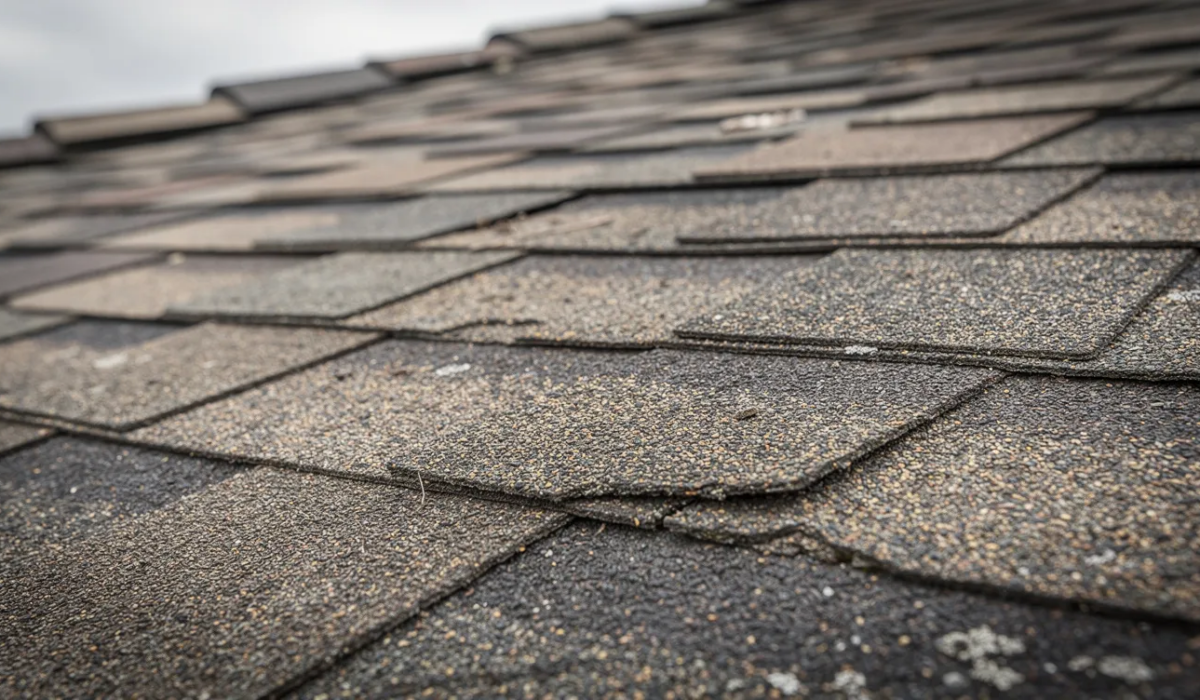
3. Curling, Cracked, or Buckled Shingles
Curling shingles indicate moisture absorption and warping. Edges turn up or tabs cup inward as asphalt ages, UV breaks down oils, and repeated freeze-thaw cycles stress the material. Curling, cracking, or buckling shingles can indicate the roof is losing its ability to shed water. Buckling creates visible waves or ridges in the roof surface, often caused by movement in the roof deck or improper installation. Cracked shingles can lead to water intrusion and leaks because they break easily under foot traffic, hail, or wind. Curling or buckling shingles indicate they have lost structural integrity. When these conditions are widespread on an Elyria home, spot repairs are temporary and a full replacement is usually the most cost effective option.
4. Granules Collecting in Your Gutters
Granules are the small, sand-like coating on asphalt shingles that protect them from UV rays and weathering. Some granule loss is normal in the first year after installation, but granules collecting in gutters signal shingle wear when it happens 10–20 years later. Granules collecting in gutters indicate roof wear after 10 years and suggest shingle deterioration is accelerating. Losing granules leaves the asphalt exposed, causing shingles to dry out, crack, and lose their waterproofing ability. Homeowners in Elyria and Amherst should check their gutters each spring and fall for dark, gritty buildup as a sign the roofing material is nearing the end of its life.
5. Water Stains on Ceilings or in the Attic
Water stains on ceilings indicate potential roof leaks. Typical stains appear as yellow or brown rings on ceilings, bubbling paint, or damp drywall on upper floors. Dark stains on walls can also signal moisture traveling from the roof. Water can travel along rafters before showing up inside, so the leak source is often several feet from the visible stain. After heavy rain, check the attic for wet insulation, darkened or moldy rafters, active drips around nails, and musty smells. Visible wear and recurring moisture problems are signs that a roof may need replacement. One small, isolated leak might be fixable, but multiple stains or chronic attic moisture across multiple areas often mean the roof system has failed. Mold growth creates health concerns, and damp insulation loses its R-value, driving up energy bills and putting extra strain on your hvac system.
6. Sagging Roof Deck
A sagging roof deck is a serious structural red flag. A roof that appears wavy or dips between rafters when viewed from the yard may indicate rotten decking or structural issues. Sagging roofs indicate possible structural issues from moisture. A sagging roofline suggests weakened structural supports, and uneven rooflines may indicate rotting structural supports beneath the surface. Common causes in Lorain County homes include long-term leaks around chimneys, previous ice dam damage, or multiple roofing layers adding excess weight. A sagging roof indicates weakened structural supports, and a sagging roofline requires immediate inspection to prevent collapse. Never walk on a sagging roof. Have it inspected immediately by a roofing professional who can assess whether full replacement with new decking is needed, along with correcting ventilation or ice dam issues.
7. Damaged Flashing Around Chimneys, Skylights, and Walls
Roof flashing consists of metal pieces that seal joints and transitions – chimney flashing, step flashing along sidewalls, and valley flashing where roof planes meet. Cracked, rusted, or improperly installed flashing is one of the most common sources of roof leaks in Ohio, especially on older brick chimneys. Look for separated caulk lines, metal pulling away from masonry, or missing counter-flashing around chimneys and skylights. Some damaged flashing can be repaired, but extensive flashing failures combined with old shingles often justify a full roof replacement for a long-term fix.
8. Moss, Algae, or Excessive Moisture
Moss or algae growth can indicate moisture retention and roof deterioration. There is an important difference between black or dark streaks from algae growth, which are often cosmetic at first, and thick, spongy moss growth on shingles that can trap moisture and cause damage. Heavy moss retains moisture against the roof surface, leading to damage that breaks down granules, lifts tabs, and accelerates aging. North-facing roofs and shaded areas in neighborhoods like Sheffield Lake and Avon Lake are especially prone to moss and algae. Do not pressure wash or aggressively scrub shingles because this removes protective granules. Moss growth can trap moisture and damage shingles over time. When growth is heavy and widespread, it is often a sign the roof is deteriorating and should be evaluated for replacement.
9. Constant Roof Repairs
Many homeowners in Elyria fall into a pattern of calling for multiple small repairs each year – fixing leaks, replacing blown-off shingles, and sealing flashing joints. Frequent repairs suggest a roof is nearing the end of its lifespan. Compare the total spent on repairs over the last 2–3 years with the cost of a new roof. Industry guidance suggests that when cumulative repair costs approach 25–30% of replacement cost, a full replacement is the smarter investment. Widespread shingle deterioration suggests that replacement is likely necessary. New roofing systems come with stronger manufacturer and workmanship warranties than piecemeal repair work, giving most homeowners better long-term value.
10. Storm Damage from Wind or Hail
Hail and strong winds from Midwest thunderstorms can cause hidden damage: bruised shingles, broken seals, and micro-cracks that later turn into leaks. Missing or cracked shingles leave the underlayment exposed. Damage often appears on one side of the roof more than others, depending on storm direction. Hail damage is not always obvious from the ground and often requires a professional roof inspection after severe weather. Homeowners insurance may cover sudden, accidental storm damage, and your insurance company will want proper documentation. Elyria Roofing Company can help document damage and assist with insurance claims so nothing is missed.
Roof Repair vs. Roof Replacement
The most common question Elyria homeowners ask after a roof inspection is whether roof repair will be enough or if full roof replacement makes more sense.
Factor | Roof Repair | Full Roof Replacement |
|---|---|---|
Cost | Lower upfront | Higher upfront, lower long-term |
Longevity | Extends life 2–5 years | 20–25+ years with quality materials |
Warranty | Limited or none on patched areas | Full manufacturer + workmanship warranty |
Maintenance | Ongoing; more repairs likely | Minimal for years |
Best For | Younger roof, isolated damage | Old roof, widespread issues, selling soon |
If repair costs approach 25–30% of a new roof, or the roof is near the end of its lifespan, replacement is usually the better investment. Example: patching a small area of missing shingles on a 10-year-old roof in Amherst is a sensible minor repair. Recommending full replacement on a 22-year-old roof in Lorain with multiple leaks and curling shingles is cost effective over time. Elyria Roofing Company provides honest, written estimates for both options so homeowners can make informed choices.
Common Roofing Problems Found on Elyria Homes
When inspecting older homes in Elyria, Lorain, Grafton, and Columbia Station, certain patterns come up repeatedly:
Multiple roofing layers. Some homes have a newer roof installed over an old one. This adds weight, hides decking problems, and shortens roof life.
Ice dams. Trapped ice along eaves during cold Ohio winters damages shingles, gutters, and fascia boards, especially on poorly insulated or ventilated attics.
Poor attic ventilation. Blocked soffit vents, undersized ridge vents, or missing baffles lead to overheated attics in summer and condensation in winter.
Chimney flashing failures. Particularly common on older masonry chimneys in Lorain and North Ridgeville homes built before the 1990s.
Wind damage. Open neighborhoods and areas along Lake Erie see lifted shingles on ridges and edges after storms.
Aging asphalt shingles. Roofs installed in the late 1990s and early 2000s are now showing widespread granule loss, cracking, and algae streaking across Lorain County. Shingles that are curling, cracking, or losing granules indicate significant wear.
What Happens If You Wait Too Long?
Left unchecked, small roof problems grow into expensive ones. Consider a homeowner who ignored ceiling stains for two years and eventually needed new decking, insulation, drywall, and flooring because of hidden leaks spreading through wall cavities.
Mold and mildew. Ongoing leaks create mold in attics and walls that is expensive to remediate and poses health risks.
Rotten decking and structural damage. Compromised rafters, damaged fascia boards, and weakened soffits result from long-term water intrusion. In severe cases, moisture can even reach the home’s foundation.
Energy loss. Wet, compacted insulation loses effectiveness, raising heating and cooling costs and making upstairs rooms uncomfortable.
Property value. Severe roof and interior damage lowers property value, complicates home sales, and creates issues during buyer inspections.
Insurance denial. Roofing companies often see claims denied because the insurance company determined the damage resulted from deferred maintenance rather than a covered event.
Addressing roof replacement early almost always costs less than waiting for emergency structural repairs.
How to Safely Check Your Roof (Homeowner Checklist)
Safety first: avoid walking on the roof. Instead, inspect from the ground with binoculars and from inside the attic. Daylight visible through roof boards indicates serious gaps or holes, and visible light through the attic indicates potential roof failure.
Use this checklist after storms and at least twice a year:
Walk around the home and look for missing shingles or shingle pieces in the yard.
Check gutters for granule buildup and debris blockages.
Look up at the roofline for sagging, uneven areas, or damaged flashing around chimneys, skylights, and roof-to-wall transitions. Daylight visible through roof beams suggests structural trouble.
Inside the attic, look for moisture, sunlight coming through roof boards, damp insulation, and darkened rafters. Visible light through roof beams indicates structural issues. Daylight visible in the attic suggests there may be openings needing attention.
Check upper-floor ceilings for water stains, bubbling paint, or musty smells.
Monitor energy bills for unexplained increases that may indicate poor roof or attic performance.
Schedule a professional roof inspection in Elyria at least every 1–2 years, and after major hail or wind events.
Elyria Roofing Company offers free, no-obligation inspections and provides photos and a written report so you can see exactly what the roofer sees. Catching problems early saves thousands compared with emergency repairs.
Frequently Asked Questions About Needing a New Roof
These are quick answers to questions Elyria and Lorain County homeowners commonly ask when they suspect they may need a new roof. They cover practical concerns that complement the main sections above.
How do I know if I need a new roof or just repairs?
Isolated issues on a relatively young roof (under about 15 years for asphalt shingles in Ohio) can often be repaired cost effectively. Widespread problems – multiple leaks, curling and missing shingles across several slopes, heavy granule loss, or sagging – usually mean a full replacement is the smarter choice. Have a trusted roofing contractor in Elyria perform a detailed roof inspection and provide side-by-side repair vs replacement estimates so you can compare costs against the roof’s remaining useful life.
How long should an asphalt shingle roof last in northeast Ohio?
Realistic ranges for most asphalt shingle roofs in Elyria’s climate: 3-tab shingles around 15–20 years and architectural shingles around 20–25 years, assuming proper installation and ventilation. Severe storms, poor attic ventilation, or multiple shingle layers can shorten that lifespan, while high-quality roofing material and regular maintenance may extend it. If you are unsure of your roof’s age, schedule a professional roof inspection to estimate remaining life and plan ahead.
Will my homeowners insurance pay for a new roof?
Homeowners insurance typically covers sudden, accidental damage like hail or wind tearing off shingles. Normal wear and tear is not covered. Coverage varies by policy, roof age, and whether the policy pays actual cash value or replacement cost for roof claims. Sagging roof areas can point to underlying structural or moisture damage that insurers may classify as maintenance neglect. Contact your insurance agent to review your specific coverage, and Elyria Roofing Company can help document storm damage for potential claims.
Can I replace only one side or section of my roof?
It is technically possible to replace only one slope or section, but color and wear differences often make the roof look mismatched. Partial replacements may not carry the same warranty benefits as a full roofing system and can complicate future resale or home inspector questions. Partial replacement can make sense for relatively new roofs with localized storm damage when coordinated with homeowners insurance and a reputable roofer.
What is the next step if I think I need a new roof in Elyria?
Document any visible signs – photos of missing shingles, ceiling stains, or sagging – and gather basic information like roof age if known. Then contact a local roofing contractor in Elyria for a free roof inspection and written estimate rather than relying on guesswork. Elyria Roofing Company can schedule convenient appointments, provide clear repair vs replacement options, discuss financing, and help with insurance claims when storm damage is involved. Having your roof inspected is the single best step you can take to protect your home.
Conclusion: Protect Your Elyria Home With a Professional Roof Inspection
Recognizing the signs you need a new roof – age, missing or curling shingles, granule loss, leaks, sagging, damaged flashing, moss or algae, constant costly repairs, and storm damage – can save you thousands in future structural repairs. You do not need to diagnose everything yourself. A trusted local roofing contractor can evaluate the roof’s true condition and give you honest options.
Elyria Roofing Company has years of experience with residential roofing across Elyria, Lorain, North Ridgeville, Avon, Avon Lake, Sheffield, Sheffield Lake, Grafton, and Columbia Station. We offer free roof inspections, honest recommendations, trained local crews, premium roofing materials, manufacturer-backed systems, strong workmanship warranties, thorough cleanup, and flexible financing.