- By Phoenix Roofing and Solar
- Uncategorized
- 0 Comment
Attic Ventilation Elyria Ohio: Why Your Elyria Attic Is So Hot in the Summer
Key Takeaways
Elyria attics get extremely hot in summer because shingles absorb intense solar energy, heat radiates into the attic space, and that heat builds up when ventilation, insulation, or air sealing are not working together as a system.
Proper roof ventilation in Elyria means balanced intake (usually soffit vents at the eaves) and exhaust (ridge vents, box vents, or other roof vents) properly designed for the specific attic size and roof layout.
Poor attic ventilation can contribute to high upstairs temperatures during humid summers, increased cooling bills, premature shingle aging, moisture buildup, mold growth, and winter ice dams on Northeast Ohio homes.
Not every hot attic is a problem, but warning signs like attic moisture, mold, recurring ice dams, or rooms that are very difficult to cool warrant a professional roof and attic evaluation.
Elyria Roofing Company is a local, experienced team that Elyria and Lorain County homeowners can call for attic ventilation inspections, roof ventilation upgrades, and roof replacement when needed.
Introduction: Why Your Elyria Attic Feels Like an Oven in Summer
Your attic gets hot in summer because the sun heats your shingles, that heat transfers through the roof deck into the attic air, and it accumulates when it has no efficient path to escape. On a clear July afternoon in Elyria, your roof surface can absorb enough solar energy to push attic temperatures far beyond what you feel in the backyard.
A warm attic is normal. An excessively hot attic, especially one paired with uncomfortable upstairs rooms, moisture, or roof damage, can signal issues with attic ventilation, attic insulation, or uncontrolled air leakage from your living space.
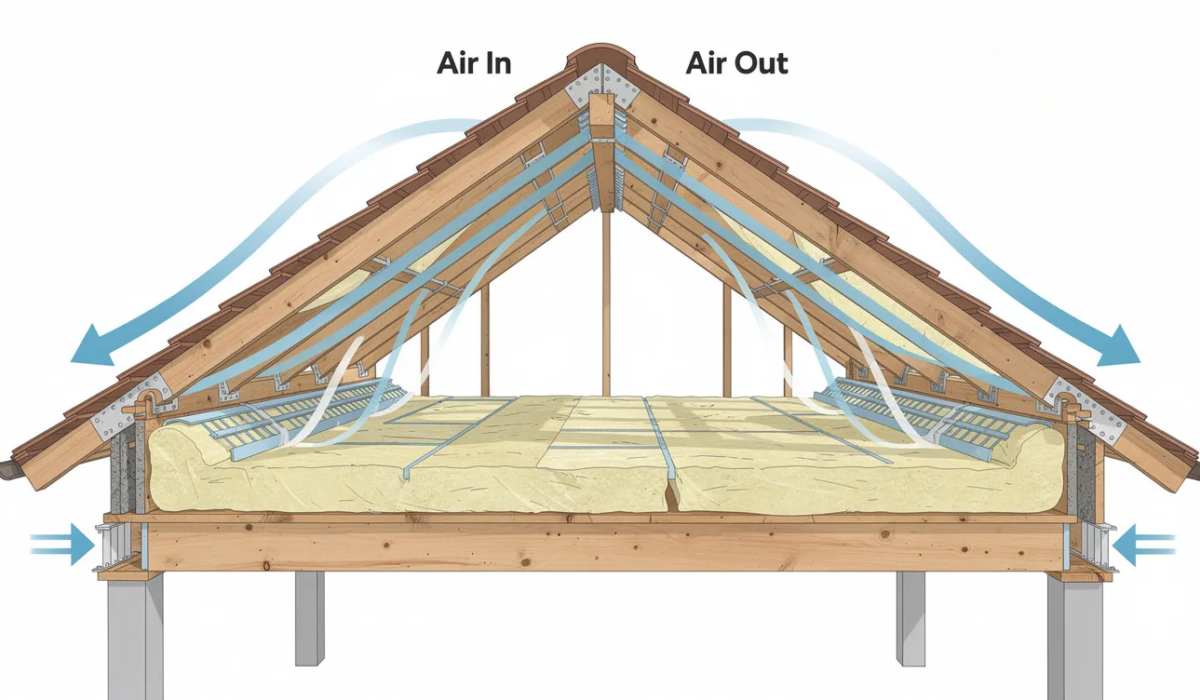
The roof, ventilation, insulation, and air sealing must work together as a single system. The basic pattern is simple: outside air enters low on the roof through intake vents at the soffits, flows upward through the attic, and exits near the ridge through exhaust vents. When that airflow is blocked, undersized, or unbalanced, heat and moisture have nowhere to go. Elyria, Ohio experiences a humid continental climate with freezing winters and warm, humid summers, which makes proper attic ventilation critical to combat intense summer heat and prevent winter ice dams.
Why Does Your Elyria Attic Get So Hot in the Summer?
Here is the step-by-step heat process that plays out on Elyria and Lorain County homes from June through September:
Summer sunlight strikes your asphalt shingles, which absorb a significant portion of that solar radiation.
Heat passes through the shingles into the roof decking beneath.
The hot decking radiates heat into the attic air, warming it rapidly.
Attic heat accumulates throughout the afternoon, especially on clear days with direct sun.
Some of that heat moves through insulation and air leaks into the rooms below your ceiling.
Several factors influence how intense this process gets. Outdoor temperature and direct sunlight intensity matter, but so does roof orientation. South- and west-facing slopes in Elyria receive the strongest afternoon sun and tend to run hotter than north-facing surfaces.
Roof color and roofing materials play a role as well. Dark architectural shingles, which are common throughout Lorain County, absorb significantly more heat than lighter-colored or reflective products. The condition of your attic insulation, the depth and continuity of that insulation, and how well air leaks around ceiling penetrations like recessed lights, attic hatches, and bath fan housings are sealed all influence how much heat reaches your upstairs rooms.
How Hot Can an Attic Get During an Ohio Summer?
Elyria attics often feel dramatically hotter than the air outside, even when outdoor temperatures are only in the 80s or low 90s. Summer attic temperatures can exceed 150°F in poorly ventilated or unvented attics with dark shingles, increasing cooling costs and straining air conditioning units.
There is no single guaranteed temperature difference. Attic temperature depends on outdoor conditions, sun exposure, roof pitch, orientation, and roof color. Homes with steep south-facing roofs and dark shingles can see much higher attic temperatures than shaded, lighter-colored roofs on tree-lined streets near areas like Cascade Park.
Ventilation levels, insulation depth, and air leakage between the house and attic also influence measured temperature. Research conducted on Ohio residences measured attic temperatures exceeding 50°F above outdoor ambient under poor ventilation and insulation conditions. However, temperature readings by themselves do not prove that the ventilation system is inadequate. The whole roof and attic system, plus signs of damage or moisture, should be evaluated before deciding on changes.
How Attic Ventilation Actually Works
Balanced attic ventilation means roughly equal intake and exhaust vent area, sized for your attic’s square footage and roof layout. Cool, drier outside air enters through intake vents near the eaves, flows through the attic space, and exits as warmer air through exhaust vents high on the roof. A balanced passive ventilation system combines continuous soffit vents for intake and continuous ridge vents for exhaust.
Proper roof ventilation helps reduce heat buildup in summer, limits moisture and condensation in cooler seasons, and supports the long-term performance of the roofing system. Northeast Ohio building requirements and shingle manufacturer guidelines use a Net Free Vent Area (NFVA) calculation to determine how much intake and exhaust a given attic needs.
Intake Ventilation: Soffit and Eave Vents
Intake ventilation usually comes from soffit vents or continuous vented soffit panels installed along the eaves. On most Elyria homes built or updated after the 1980s, these are the primary intake source. Soffit vents allow cooler air to enter the attic at the lowest edge of the roof, which is essential for creating upward airflow toward the ridge.
Common problems on Elyria homes include insulation pushed tight against the roof deck over exterior walls, painted-over soffit panels, and bird or insect nests blocking intake openings. Blocked soffit vents can lead to poor attic airflow. Without adequate intake, even the best ridge vents or other exhaust vents cannot move enough air to maintain proper ventilation.
Exhaust Ventilation: Ridge Vents, Box Vents, and Fans
Exhaust ventilation lets warm attic air escape near the top of the roof. Ridge vents are continuous vents installed along the roof peak under the cap shingles, and they are the most efficient exhaust option for attics. They are a common choice on full roof replacement projects throughout Northeast Ohio.
Box vents, sometimes called turtle vents, are static vents installed in rows near the ridge. Box vents require several units to achieve airflow equivalent to a continuous ridge vent. Gable vents provide some cross-ventilation but are less effective on complex roof shapes.
Powered attic fans are motor-driven exhaust systems sometimes found on Elyria homes. However, powered attic fans can depressurize the attic and pull conditioned air out of the home if intake is insufficient. Exhaust vents are only effective when paired with adequate intake vents.
Ridge Vents vs. Box Vents vs. Powered Attic Fans
Many Elyria homeowners ask whether to use ridge vents, box vents, or powered attic fans when improving attic ventilation. Here is how each option compares for common roof styles in Elyria and nearby communities like Lorain, North Ridgeville, and Amherst:
Feature | Ridge Vents | Box Vents | Powered Attic Fans |
|---|---|---|---|
How they work | Continuous exhaust along the roof peak using natural convection and wind | Individual static exhaust vents spaced near the ridge | Motor-driven fan forces hot air out, triggered by thermostat or humidistat |
Location | Along the entire ridge line | Rows near the ridge, spaced apart | Roof-mounted or gable-mounted |
Advantages | Even exhaust distribution, low visual impact, no moving parts | Easier to retrofit on complex roofs, lower cost per unit | Can move large volumes of air quickly |
Limitations | Requires continuous soffit intake; not ideal on every roof shape | Less uniform coverage, can leave dead zones between vents | Can pull conditioned air from living space, uses electricity, requires adequate intake |
Intake requirements | Must have sufficient vented soffits along the full eave length | Still requires matched soffit intake | Intake must exceed fan exhaust volume to avoid depressurization |
Simply adding more vents does not guarantee better roof ventilation. The system must be balanced and compatible with the roof’s shape and existing vents. Mixing multiple exhaust types, such as ridge vents plus a powered attic fan plus gable vents, without a full ventilation assessment can short-circuit airflow and reduce optimal performance.
7 Signs Your Elyria Home May Have an Attic Ventilation Problem
Poor attic ventilation often shows up through comfort issues, visible roof problems, or moisture symptoms rather than through temperature alone. Here are seven warning signs:
A very hot attic compared to similar neighboring homes with comparable sun exposure.
Upstairs rooms that stay hot even when the air conditioner runs continuously.
Large temperature differences between the first and second floors.
Moisture or condensation on nails, rafters, or the underside of the roof deck.
Visible mold or mildew in the attic, along with musty smells.
Shingles aging, curling, or losing granules faster than expected, especially on south-facing slopes.
Recurring winter ice dams along the eaves with icicles and water staining.
These symptoms can also be caused by insufficient insulation, ductwork issues, or air leaks. A professional roofing contractor in Elyria should diagnose the root causes instead of assuming poor ventilation alone is to blame. If multiple signs are present, schedule a roof inspection focusing on ventilation, insulation, and moisture conditions.
How Poor Attic Ventilation Can Affect Your Roof
Chronic heat and moisture buildup in an Elyria attic directly affects long-term roofing system performance. Poor ventilation can void roof manufacturer warranties, which typically require minimum ventilation standards to be met.
Trapped heat in summer accelerates shingle aging, dries out asphalt, and contributes to blistering, curling, or granule loss. Inadequate ventilation can accelerate shingle aging and reduce roof lifespan, especially on roofs with heavy sun exposure. Poor ventilation can shorten the lifespan of roofing materials significantly over time.
Inadequate ventilation combined with daily temperature swings and humidity promotes condensation on the underside of the decking. Over time this leads to soft or rotted decking panels and wood rot. Mold or mildew on sheathing, rusted nails, and musty attic odors can indicate that warm, moist air from bathrooms or the living space is not being properly vented. Ventilation helps mitigate roof temperature extremes to protect roofing materials and reduce energy costs, but it is one component of a complete roofing system that also includes underlayment, flashing, gutters, insulation, and air sealing.
Why a Hot Summer Attic Can Be Connected to Winter Ice Dams
Elyria homeowners who struggle with a hot attic in August often see ice dams forming along their eaves in January and February. Ice dams form when warm air melts snow on the upper roof, causing meltwater to run toward colder eaves where it refreezes. Here is how it happens:
Heat escapes from the living area into the attic through air leaks and thin insulation.
The roof deck warms above freezing higher on the slope.
Snow melts and runs down toward colder, unheated overhangs.
Water refreezes at the edge, forming an ice ridge.
Additional meltwater backs up behind the ice and can reach under shingles, causing leaks and structural damage.
Poor ventilation keeps the upper roof too warm, intensifying the temperature difference between the heated roof area and cold eaves. Ice dams are often a sign of inadequate insulation and ventilation working together. Insufficient insulation and air leaks from recessed lights, bathroom fans, attic hatches, and ductwork also contribute to repeated ice dam formation. Poor attic ventilation can lead to ice dams in winter, and ice dams can cause leaks under shingles and damage roofs.
Evaluating insulation, air sealing, and attic ventilation together is important when Elyria and Lorain County homeowners want to reduce ice dam risk, especially when planning a roof replacement.
Common Attic Ventilation Problems Found on Elyria Homes
Elyria homes vary widely in age and construction, from mid-1900s bungalows with minimal vents to newer subdivisions with ridge and soffit systems. Older roofs often lack adequate ventilation, worsening problems with heat and moisture. Here are recurring issues local roofers find:
Soffit vents painted or sealed shut during siding installations
Blown-in insulation covering intake vents without proper baffles
Not enough soffit vent area for the attic size
Too many exhaust vents installed without matching intake
Bath or kitchen exhaust fans venting into the attic instead of outdoors
Roof additions that created separate attic spaces without a clear ventilation path
Powered attic fans installed on older roofs without enough intake openings
Some older Elyria and Lorain County homes still rely only on small gable vents, which may not provide adequate airflow for today’s roofing materials and insulation levels. An experienced team should physically inspect soffits, baffles, vents, and attic partitions rather than assuming that visible roof vents from the driveway tell the whole story.
Is Your Attic Insulation Actually the Problem?
Some hot attic and comfort complaints in Elyria are driven more by insulation levels and air leaks than by roof ventilation alone. Ventilation is not a substitute for proper air sealing and insulation; sealing ceiling leaks is crucial. A complete assessment should separate the roles of ventilation, insulation, and air sealing.
Adding more roof vents without addressing inadequate insulation or major air leakage paths may not meaningfully change attic temperature or overall comfort.
Ventilation: Managing Airflow and Moisture
Attic ventilation is the controlled exchange of attic air with outside air using intake vents and exhaust vents sized for the specific roof. It helps carry away some heat and manage moisture levels, but it does not cool the house the way air conditioning does. Daily activities like cooking, showering, and laundry produce warm, humid air that can lead to condensation without proper attic ventilation. Poor ventilation can lead to moisture buildup and mold growth. Ventilation is most effective when intake and exhaust are balanced and unobstructed.
Insulation: Slowing Heat Transfer
Attic insulation, whether fiberglass batts or blown-in cellulose, primarily slows heat flow between the hot attic and the cooler rooms below. Even with proper roof ventilation, an attic can still run hot on sunny days. Adequate insulation is what helps prevent that attic heat from quickly entering the living space.
Northeast Ohio attics typically need significant insulation depth to meet current performance expectations. Compressed, wet, or missing insulation reduces effectiveness. Uneven insulation or gaps around can lights and attic access openings create hot spots on ceilings and make bedrooms under the attic feel warmer.
Air Sealing: Reducing Uncontrolled Air Leaks
Air sealing means closing the gaps between the conditioned living area and the attic around recessed lights, plumbing stacks, duct chases, and attic hatches. Without proper air sealing, warm humid indoor air can escape into the attic in winter and conditioned air can be pulled upward in summer.
Large air leaks also feed moisture into the attic, increasing the risk of condensation on the roof deck during cold Northeast Ohio nights. A roofer or insulation professional might look for darkened insulation, drafts, or visible gaps as evidence of air leakage paths. Insulation and air sealing are essential for effective moisture control to prevent ice dams and condensation issues. Sealing big leaks before or during a ventilation upgrade makes the entire system perform more consistently.
Can a Hot Attic Make Your Upstairs Harder to Cool?
High attic temperatures increase the temperature of ceiling drywall and framing, making upstairs rooms feel warm even when the thermostat is set low. Excessive attic heat can increase energy bills significantly as the air conditioner works harder to compensate.
How much heat migrates into the living space depends on insulation effectiveness, the presence of air leaks, and whether HVAC ducts run through the attic. Ductwork in a very hot attic delivers warmer air to supply vents, forcing longer AC run times to achieve the same comfort level. While improving attic ventilation and insulation can help with upstairs comfort, specific energy efficiency gains depend on the individual home and should be evaluated professionally.
Common Attic Ventilation Mistakes
Well-intentioned changes to roof ventilation sometimes create new ventilation problems on Elyria homes when they are not planned as part of a balanced system. Common mistakes include:
Insulation pushed into soffit areas blocking intake vents
Installing ridge vents without confirming intake capacity at the soffits
Leaving old box vents or gable vents active alongside new ridge vents, which can short-circuit optimal airflow
Installing powered attic fans without checking whether intake is adequate
Allowing bathroom or kitchen exhaust fans to terminate inside the attic
Assuming more vents always equal better ventilation
Gable vents should not replace dedicated eave intake as they can disrupt airflow patterns
These errors can cause some vents to pull air from each other instead of from the soffits, reducing the system’s ability to prevent moisture buildup and manage heat. Homeowners should consult a roofing contractor in Elyria before cutting new roof penetrations or adding powered ventilation.
Does Your Elyria Home Have Enough Roof Ventilation?
Determining whether an attic has enough ventilation is not as simple as counting visible vents from the yard. Ohio requires 1 square foot of vent area per 150 square feet of attic floor area. Balanced ventilation requires this total area to be divided between intake and exhaust.
Roofers calculate the attic floor area, then apply manufacturer and Ohio building code requirements to determine the minimum total NFVA needed. That total is then split between soffit intake vents and ridge or box exhaust vents to maintain balanced airflow. A professional ventilation assessment in Elyria should check actual vent sizes, locations, and obstructions rather than relying on what appears from the ground at street level.
What Should a Professional Attic Ventilation Inspection Include?
A thorough inspection evaluates how the entire roof and attic system behaves, not just how many vents are visible. An Elyria roofing contractor should review:
Intake system: soffit vents, vented drip edge, or alternative intakes, and any blockages from insulation, paint, or debris
Exhaust components: ridge vents, box vents, gable vents, and powered attic fans, including whether they are compatible and appropriately placed
Attic insulation depth, condition, and coverage
Roof decking for signs of moisture, peeling paint, or deterioration
Visible mold or mildew on framing, decking, or sheathing
Bath and kitchen exhaust terminations
Separate attic areas created by additions
Baffles or vent chutes near eaves
Evidence of past ice dams or water staining
The complete system should be evaluated before recommending any changes to protect your roof life and maintain security against moisture and heat damage.
Should You Upgrade Attic Ventilation When Replacing Your Roof?
A roof replacement in Elyria is one of the best opportunities to evaluate and improve attic ventilation because the old shingles and vents are already being removed. During replacement, the contractor can inspect decking for damage, adjust or add soffit intake, and install ridge vents or properly located box vents as part of a tailored solutions approach.
This is also the time to confirm bathroom exhaust ducts are properly routed to the exterior and to add or repair baffles that keep insulation from blocking soffits. Older roofs may lack the recommended ice and water shield coverage, which can be corrected during a full replacement.
A ridge vent should not be installed automatically on every roof. The roofer should verify that the roof design, attic layout, and intake ventilation can support it. Homeowners planning roof replacement should ask their roofing company how ventilation, ice and water protection, and insulation considerations will be addressed to meet their specific roofing needs.
Homeowner Attic Ventilation Checklist
Use this quick checklist before scheduling a professional roof inspection:
[ ] Are soffit vents visible and free of paint, debris, or insulation blocking them?
[ ] Does the roof have visible exhaust vents such as ridge or box vents?
[ ] Are bathroom fans vented directly outside through a dedicated roof or wall vent?
[ ] Is there any moisture staining or dark areas on the underside of the roof decking?
[ ] Is there visible mold, mildew, or humidity in the attic?
[ ] Is the upstairs much harder to cool in summer than the first floor?
[ ] Do you see large ice dams or icicles at the eaves most winters?
[ ] Are shingles showing unusual curling, granule loss, or premature aging?
[ ] Has the attic ventilation system ever been professionally evaluated?
If several of these items raise concerns, contact a local roofer in Elyria for a full roof and attic ventilation evaluation before making changes on your own. Maintaining a properly functioning attic system protects your home’s comfort, roof life, and customer satisfaction year-round.
Frequently Asked Questions About Attic Ventilation in Elyria
Why is my attic so hot during the summer in Elyria?
Summer sun heats the shingles, heat conducts into the roof deck and attic, and if ventilation, insulation, or air sealing are not performing well, that heat builds up dramatically. Some warmth is normal, but extreme temperatures combined with comfort problems, moisture, or roof issues mean it is worth having a roofer in Elyria check your roof ventilation and insulation.
How hot is too hot for an attic?
There is no single universal number because attic temperature depends on roof color, sun exposure, insulation, and ventilation. If your attic feels dangerously hot to enter, upstairs rooms are hard to cool, or you see moisture or shingle damage, a professional roof inspection and ventilation assessment is recommended.
Do I need soffit vents if I have a ridge vent?
Ridge vents require adequate intake air, typically from soffit vents, to work properly. Intake vents let cooler air enter while exhaust vents let warm air escape. Without intake, a ridge vent alone may move very little air. If you have a ridge vent but no visible soffit vents, or soffits that may be blocked, have a roofing contractor verify whether the system is truly balanced.
Will an attic fan fix my hot attic in Elyria?
Powered attic fans can move large volumes of air but may pull conditioned air from the home if there is not enough intake ventilation or if air leaks are not sealed, which can actually increase energy use. Avoid installing powered fans without a full review of intake vents, existing exhaust, and overall attic ventilation design by a properly designed system evaluation.
How do I know if my Elyria home has enough roof ventilation?
The most reliable way is to have a local roofing contractor measure your attic, calculate required Net Free Vent Area, and compare it to the actual intake and exhaust vents installed. Signs like attic moisture, mold, recurring ice dams, or premature shingle aging can indicate the need for a professional ventilation assessment, especially on older Northeast Ohio homes.
If your Elyria attic is running too hot, your upstairs rooms are uncomfortable, you are noticing moisture or mold in the attic, or you have dealt with recurring ice dams, do not guess at the fix. Contact Elyria Roofing Company to schedule a professional roof and attic ventilation inspection. Our experienced team serves Elyria and Lorain County homeowners with honest evaluations and tailored solutions for your specific roofing needs. Call today for a free estimate.