- By Phoenix Roofing and Solar
- Uncategorized
- 0 Comment
Roof valleys are one of the most leak-prone areas on any home in Elyria, Ohio. If your house has two or more roof slopes that meet, you have at least one valley channeling water, snow, and debris toward your gutters. Understanding how valleys work, why they fail, and what proper installation looks like can save you from expensive interior damage and help you have a productive conversation with your roofing contractor.
Key Takeaways
A roof valley is the V-shaped channel where two sloping roof planes meet. It acts as one of the primary drainage pathways for rainwater and melting snow, funneling a large volume of runoff toward your eaves and gutters. For Elyria homes dealing with a humid continental climate, heavy snowfall, and substantial rainfall, valleys take more punishment than almost any other part of the roof.
Many roof leaks in Elyria, OH start in valleys because of concentrated water flow, snow and ice buildup, fastener placement errors, and aging materials.
Elyria receives approximately 50 inches of snow annually and about 40 inches of rain, making proper valley design critical for every residential roof.
A leaking roof valley does not always require a full roof replacement. Proper diagnosis by Elyria roofing professionals can often support targeted repair that addresses the actual problem.
Elyria homeowners in Lorain County who notice ceiling stains, drips, or visible valley deterioration should schedule a professional roof inspection. Many local roofing contractors provide free estimates to help you understand the scope and cost before committing.
What Is a Roof Valley?
A roof valley is the internal angle where two sloping roof planes meet, forming a channel that carries water off the roof. Picture the letter “V” or “L” running diagonally down your roofline, often above rooms like living rooms, garages, or where an addition connects to the main house.
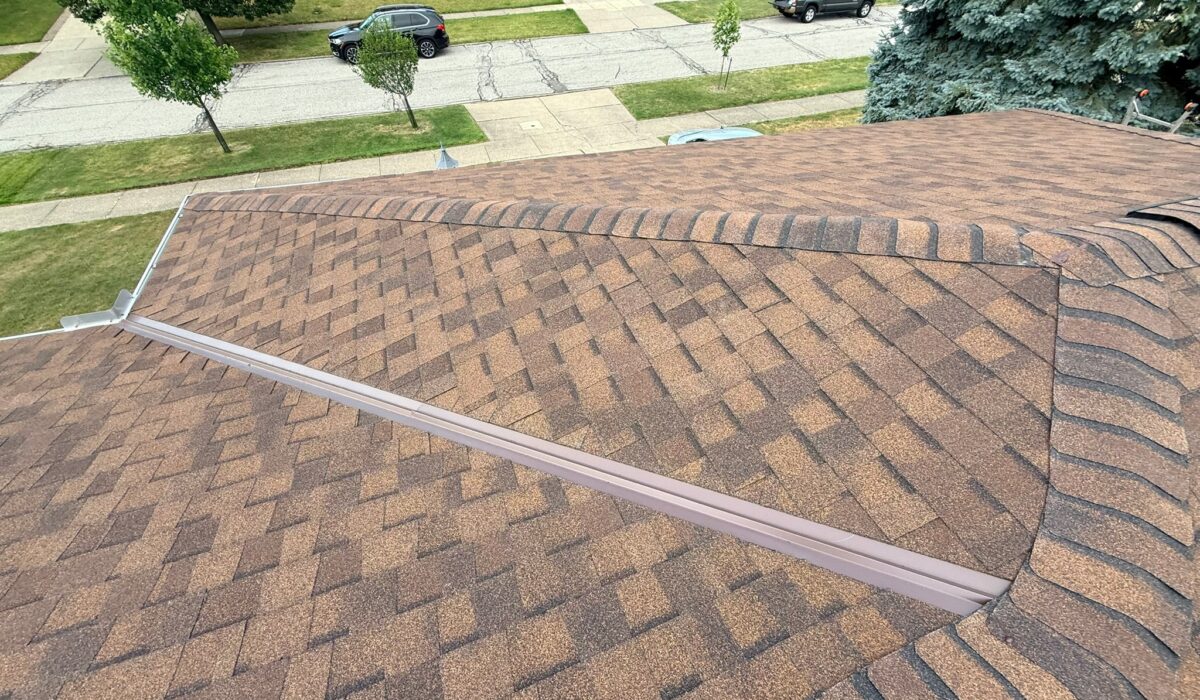
Most Elyria homes with intersecting gables, hips, or split-level additions have at least one roof valley, and many have several. Valleys are common investigation points during a roof inspection because they collect water, snow, and debris from multiple directions. From the ground, a valley may appear as a visible metal strip (open valley) or a continuous line of shingles (closed or woven valley) on an asphalt shingle roof.
Why Roof Valleys Handle So Much Water
Roof valleys collect runoff from two or more roof planes, concentrating it into a narrow channel. A typical Elyria home near Cascade Park or along Gulf Road might have several slopes feeding into one valley, resulting in significantly more gallons per minute during thunderstorms than any single roof plane handles alone. Roof valleys act as primary drainage pathways for rainwater and melting snow.
This connects directly to Northeast Ohio weather patterns: heavy summer downpours, fall storms off Lake Erie, and rapid snowmelt events in late winter. Elyria receives about 40 inches of rain annually, making proper valley design critical. Because valleys handle more water than the rest of the roof, any installation flaw, puncture, or material failure in that area is more likely to produce a noticeable roof valley leak.
Gutters and downspouts at the bottom of valleys on Elyria homes must be properly sized and kept clear. If they back up, water can pool at the eaves and push back into the valley, accelerating damage.
What Are the Different Types of Roof Valleys?
Most asphalt shingle roofs in Elyria use one of three common valley designs: open, closed-cut, or woven. Each approach can be acceptable when installed correctly and in accordance with manufacturer guidelines and local building practices in Lorain County.
Feature | Open Valley | Closed-Cut Valley | Woven Valley |
|---|---|---|---|
Appearance | Visible metal strip in valley center | Continuous shingle look with a clean cut line | Interlaced shingles, no visible metal |
Typical Materials | Metal flashing (galvanized steel, aluminum) over underlayment | Shingles over hidden metal or membrane | Shingles woven across valley over membrane |
Pros | Excellent water shedding; easy to inspect; debris washes out | Cleaner all-shingle look; common on many Elyria homes | Uniform appearance; traditional look |
Considerations | Visible metal may not suit all aesthetics; higher material cost | Cut line placement is critical; edges wear over time | Labor-intensive; not recommended for many laminate shingles; can trap debris |
Open valleys feature a visible metal channel that sheds ice, water, and debris quickly. Closed-cut valleys are covered with overlapping asphalt shingles and require meticulous installation to perform well. Woven valleys interlace shingles from both slopes with no exposed metal. Impact-resistant asphalt shingles are trending in Elyria and work well with all three valley styles when paired with proper underlayment.
Open vs. Closed Roof Valleys
Both open and closed valleys appear on Elyria roofs, and the right choice depends on roof design, materials, and installer preference rather than a single universal answer.
Open roof valleys offer visible metal, strong water-shedding capability, and easy visual inspection for damage. Closed-cut roof valleys provide a cleaner, all-shingle appearance and are common on many Elyria homes with asphalt shingles, though the metal valley flashing beneath the shingles remains hidden.
In Northeast Ohio roofing conditions, smooth metal surfaces in open valleys can help sliding snow clear faster, but they may also shed snow more abruptly. Steep roofs complicate waterproofing due to dormers and flashings, so valley design should account for roof pitch and geometry. Elyria homeowners should not assume they must switch valley styles during a roof replacement. Instead, have a conversation with a local roofing contractor about what fits your roof structure and manufacturer specifications.
Do Roof Valleys Need Metal?
Many roof valleys in Elyria use metal, especially in open valley systems, but not every acceptable valley design shows metal on the surface. Metal roofs offer superior durability and energy efficiency, and in valley applications, metal serves as a durable, smooth, water-shedding surface in the highest-flow area of the roof.
Closed and woven asphalt shingle valleys often still include metal or specialized underlayment beneath the shingles, even when homeowners cannot see it from the ground. Many local contractors recommend robust flashing systems for effective drainage in roof valleys regardless of whether the metal is visible. Some manufacturer-approved configurations use shingle-covered assemblies with reinforced underlayment.
Rather than requesting a specific material because a neighbor on the same street has it, rely on your roofer in Elyria, Ohio to match valley materials to your specific roof system and local code requirements.
What Goes Underneath a Roof Valley?
The most important leak-prevention components in a roof valley are hidden beneath the shingles, making professional installation and inspection critical. Elyria roofing contractors must comply with local building codes, and Elyria’s building standards require valley linings beneath asphalt shingles with specified materials.
Here is what sits beneath the surface:
Roof decking: Plywood or OSB sheets attached to rafters or trusses, forming the solid base for the valley assembly. Victorian-era Elyria homes commonly have steep pitches of 9:12 to 12:12, which adds complexity to valley work.
Ice and water shield: A self-adhering membrane often installed at least 24 inches on each side of the valley centerline in cold climates like Northeast Ohio, with 36-inch-wide underlayment required in colder zones.
Standard underlayment: Felt or synthetic underlayment overlapping into the valley area, working together with the ice and water shield to back up exposed surface materials.
Valley material: Metal roof valley flashing (galvanized steel or aluminum) or carefully arranged asphalt shingles, depending on whether the design is open, closed, or woven.
Because these layers are hidden, Elyria homeowners usually cannot judge valley quality from the ground. A roof inspection by an experienced roofing company is needed to assess underlying conditions when leaks appear.
8 Reasons Roof Valleys Leak
Leaking roof valleys in Elyria often share a few common causes. Proper installation of roof valleys is essential to prevent water backup and related damage, and early diagnosis can limit damage to decking and interiors.
Improper installation: Missing or misaligned valley flashing, lack of ice and water shield, or incorrect shingle cuts that direct water under the shingles instead of over them.
Fastener problems: Nails driven too close to the valley centerline, overdriven nails breaking through shingles, or exposed fasteners sitting in the water path.
Shingle deterioration: Aging asphalt shingles on Elyria homes becoming brittle, curling, or losing granules, reducing their ability to shed water along the valley. Asphalt shingles last around 20 to 30 years with proper maintenance, but valleys often show wear first.
Valley component deterioration: Rusting metal, cracked sealant at seams, or degraded underlayment that allows water to reach the roof decking. Valley flashing and underlayment must be inspected for corrosion or wear to prevent leaks.
Leaves and debris: Fall leaf buildup from mature trees near Cascade Park can trap moisture and redirect water sideways under the shingles. Debris accumulation can obstruct water flow in roof valleys, increasing the risk of ice dams.
Snow and ice: Ice dams and freeze-thaw cycles common in Lorain County hold water in valleys longer than normal and force it under shingles. Ice dam formation occurs when melting snow refreezes in cooler valley areas.
Storm damage: Wind events in Elyria often lift shingles along rake and ridge lines. Wind-driven rain or impact from branches during Northeast Ohio storms can create small openings that become a roof valley leak. Local roofing contractors in Elyria handle storm damage repairs regularly.
Improper previous repairs: Quick fixes with roofing cement or caulk spread over problem areas without correcting the underlying cause hide defects temporarily but fail under the next heavy storm.
Why Nail Placement Matters Around Valleys
Every nail in a shingle creates a small penetration, and nails placed in the wrong spot near a valley can allow water to follow the shank into the home.
Manufacturer-specified clearance distances from the valley center define “no-nail zones” where fasteners should not be driven. According to NRCA guidelines, fasteners should be kept at least 8 inches from the valley centerline. Water flowing quickly down a valley during heavy Elyria storms or rapid snowmelt will find any low spot or nail head in its path.
Overdriven nails can cut through shingles, while underdriven nails hold shingles up off the valley surface. Both contribute to leaks. Correct nailing patterns are a key reason to hire an experienced roofer in Elyria, Ohio rather than attempting DIY valley repairs.
How Leaves and Debris Affect Valley Drainage
Elyria’s tree-lined streets and mature neighborhoods near Cascade Park and West Park produce heavy debris accumulation in roof valleys every fall. Heavy autumn leaves can block drainage in roof valleys, leading to leaks or rotting.
Piles of leaves, twigs, and shingle granules slow water, causing it to back up and flow sideways under shingles at the valley edges. Damp debris pads keep shingles wet longer after storms, accelerating shingle deterioration and valley component wear. Moisture from the Black River gorge also affects roof drying times in nearby neighborhoods, compounding the problem.
Clogged gutters at the bottom of a valley can cause water to pool at the eaves and push back up into the valley during heavy rain. Safe homeowner maintenance includes ground-level visual checks, scheduling professional cleaning of gutters and downspouts, and avoiding climbing steep or icy roofs.
How Northeast Ohio Snow and Ice Affect Roof Valleys
Elyria, Ohio experiences a humid continental climate with heavy snowfall and substantial rainfall. The city receives approximately 50 inches of snow annually, with multiple snow events, midwinter thaws, and freeze-thaw cycles affecting Elyria roofs each season.
Snow accumulation: Drifting and sliding snow from upper roof sections can pack tightly into the valley channel. Roof valleys are vulnerable to ice dams during freezing winters due to melting snow from upper roofs.
Snowmelt and refreezing: Daytime thaw sends meltwater through valleys that then refreezes at night, especially near cold eaves and overhangs. Freeze-thaw cycles can damage roofing materials over time.
Ice dams: Ice forming at the lower part of the valley or eaves blocks water, forcing it under shingles and into the house. Ice dams frequently form on roofs due to Elyria’s winter conditions.
There is an important distinction: sometimes the valley is built correctly but an ice dam traps water against it. Other times, poor valley construction allows even small amounts of ponded water to leak inside. Proper attic insulation and ventilation are crucial to prevent ice dam formation in roof valleys. Elyria homeowners who see recurring winter leaks or thick ice in valleys should consider an attic ventilation and insulation evaluation alongside a valley inspection.
Signs an Elyria Roof Valley May Be Leaking
Early warning signs of roof valley leaks often show up inside the home before major damage occurs. Regular inspection and maintenance of roof valleys can prevent leakage and water damage.
Ceiling stains: Discolored drywall or water marks near where two roof slopes meet, often in hallways, stairwells, or rooms under valley intersections.
Attic moisture: Damp insulation, moldy odors, or visible water staining on the underside of roof decking beneath a valley.
Visible valley deterioration: Cracked, missing, or displaced shingles in the valley, or rusted, bent, or punctured metal flashing visible from the ground.
Heavy-rain leaks vs. snowmelt leaks: Leaks that only appear during intense downpours may reflect different issues than leaks that show up days after a snowstorm.
Recurring leaks: The same area leaking repeatedly despite prior repairs is a strong sign that professional roof leak repair is needed.
Why the Ceiling Stain May Not Be Directly Under the Roof Leak
Water often travels along roof decking, rafters, and ceiling framing before it becomes visible as a stain or drip inside an Elyria home. It can run downhill along plywood seams or follow fasteners and framing members, emerging several feet away from the actual entry point in the roof valley.
Valleys are high-suspect areas, but an experienced roofing company in Elyria, Ohio will trace the leak path rather than assume the valley is the source. A valley leak near the ridge may show up as a stain across a ceiling joint closer to an interior wall or light fixture. Elyria homeowners should avoid cutting open finished ceilings or attempting patching until a professional roofer has identified where water is actually entering the roof system.
How Roofers Diagnose a Valley Leak
Proper diagnosis combines exterior inspection, attic investigation, and an understanding of water movement across the roof.
Exterior inspection: Checking shingle condition along the valley, looking for gaps, lifted edges, exposed nails, or damage to valley flashing.
Nearby roof features: Inspecting plumbing vents, skylights, chimney flashings, and wall intersections near the valley that could be contributing to the leak. Steep-pitched roofs often require fall protection measures, and pitches above 4:12 need safety protocols per OSHA standards.
Attic inspection: Examining the underside of valley decking for water stains, mold, or rot, and tracing drip marks back toward the highest visible point of moisture.
Controlled water testing: Roofers may use a hose under safe conditions to reproduce the leak pattern without saturating the structure.
Assuming the valley is at fault simply because the stain appears under it can lead to missed problems and repeated leaks. Lorain County roofing professionals take a methodical approach before recommending any repair.
Can a Leaking Roof Valley Be Repaired?
Yes, many leaking roof valleys in Elyria can be repaired without replacing the entire roof, depending on age and overall condition. Localized repair options include removing shingles in and around the valley, replacing damaged valley flashing or underlayment, and reinstalling new shingles following manufacturer specifications.
Minor fastener issues or small sections of deteriorated metal roof valley flashing may be correctable with partial replacement rather than a full valley rebuild. Any soft or water-damaged decking found under the valley should be replaced during repair to provide a solid base. Elyria homeowners should request a detailed written scope of work from their roofer so they understand exactly what will be addressed.
When Does the Entire Valley Need to Be Rebuilt?
Some valley problems are extensive enough that piecemeal patching is unreliable and a full valley rebuild is the better long-term solution.
Improper original installation: Valleys installed without ice and water shield protection, misaligned flashing, or shingle cuts that direct water inward.
Repeated leaks: If the same valley has leaked multiple times despite prior repairs, rebuilding the assembly is often more cost-effective.
Deteriorated valley components: Widespread rust, cracks, or separation in metal flashing or underlayment that cannot be fixed with small patches.
Damaged decking: Sections of plywood or OSB under the valley that are soft, delaminated, or structurally compromised from long-term moisture.
Failed previous repairs: Excessive roofing cement hiding underlying defects often requires stripping the valley to the decking and rebuilding correctly.
Roof Valley Repair vs. Roof Replacement
A valley leak does not automatically mean an Elyria homeowner needs a new roof. But sometimes valley issues reveal widespread aging across the entire roof system.
Factor | Repair May Make Sense | Replacement May Make More Sense |
|---|---|---|
Damage scope | Localized to one or two valleys | Multiple leaking areas around the house |
Surrounding shingles | Still serviceable and flexible | Brittle, curling, or failing across large sections |
Decking condition | Limited soft spots, easily patched | Extensive deterioration beyond the valley |
Roof age | Within reasonable service life | Approaching or past 20–30 year expected lifespan |
Cost comparison | Significantly less than full replacement | Cumulative repair costs approach replacement cost |
Roof replacement costs in Elyria range from $5,700 to $34,912, with replacement starting at $750 per square. Roof size and complexity influence the final cost of any roofing project. Elyria homeowners often choose roof replacement when the cost of multiple major repairs begins to approach the price of a new roof with updated materials and warranties.
Ask your roofing contractor for side-by-side written options showing repair pricing versus replacement costs and timelines.
What Happens to Valleys During a Roof Replacement?
Full roof replacement in Elyria, Ohio is the best opportunity to correct old valley problems and upgrade underlying protection. Here is what the process typically includes:
Tear off: Removal of old shingles, valley flashings, and underlayment down to the roof decking so the entire valley assembly is exposed. A full tear off is standard in most Elyria roof replacement projects.
Deck inspection: Checking plywood or OSB in the valley area for rot, delamination, or mold, and replacing any compromised panels.
Valley protection: Installing self-adhering ice and water shield membrane and integrating it with surrounding underlayment.
Valley material installation: New metal roof valley flashing for open valleys, or correctly prepared shingle-covered assemblies for closed or woven valleys.
Shingle installation: Proper shingle cuts, overlaps, and nail placement on each side of the valley.
Final inspection: Verifying valley lines are straight, fasteners are correct, and flashing transitions to adjacent roof features are properly sealed.
Roof Valley Damage and Roof Decking
Persistent valley leaks can cause serious damage to roof decking, which supports the entire roof system on Elyria homes. Typical damage includes dark water stains, soft or spongy spots when walked on, delamination of OSB, and mold or mildew on the underside of the deck visible from the attic.
Sagging along a roof valley line may indicate long-term moisture affecting rafters and decking, not just surface shingles. When valley leaks have existed for months or years, repair often includes replacing sections of decking along with the visible valley materials.
Common Roof Valley Installation and Repair Mistakes
Many valley leaks in Lorain County result from avoidable installation or repair errors rather than extreme weather alone.
Improper fasteners: Nails that are too short, placed too close to the valley centerline, or left with exposed heads in the water path.
Poor shingle cuts: Jagged, misaligned, or reversed cuts that let water run under shingles instead of over them, especially in closed-cut valleys.
Obstructed drainage: Leaving debris or scrap materials in the valley during installation, or creating dams with thick roofing cement ridges.
Inadequate underlying protection: Missing or too-narrow ice and water shield in valleys, or underlayment that does not overlap correctly.
Excessive sealant dependence: Roofing cement or caulk used to hide gaps instead of installing proper flashing or correcting shingle layout.
Ignoring damaged decking: Installing new shingles on top of a soft or rotten base, guaranteeing future problems.
Can Roofing Cement or Caulk Fix a Valley Leak?
Roofing cement and sealants have limited, specific uses in valley assemblies, but smearing caulk over a leak is rarely a lasting solution.
Sealants may be appropriate for sealing small flashing laps or fastener heads outside of main water channels, following manufacturer guidelines. Heavy layers of cement in the valley channel can actually trap debris, block flow, and accelerate deterioration in high-volume valleys. In Elyria’s climate, patches tend to fail during winter due to thermal expansion and contraction from freeze-thaw cycles.
Using roofing cement to cover cracks or gaps without removing shingles and inspecting underlying materials hides problems without fixing them. If you see large patches of black mastic or caulk along a valley, consider a professional roof inspection to evaluate whether more comprehensive repairs are needed. Tile roofs can last decades with proper maintenance, and slate roofs are known for lasting a lifetime, but even these premium materials need correctly built valleys to perform.
How Elyria Homeowners Can Help Prevent Valley Problems
While homeowners should not climb steep or icy roofs for safety reasons, they can do a lot from the ground to protect valleys.
Ground-level observation: After storms, visually scan valleys for missing shingles, bent metal, or large debris piles.
Maintain gutters and downspouts: Keep them clear, particularly at the bottom of valleys, so water can leave the roof quickly during heavy rain.
Manage tree debris: Trim branches that overhang valleys where practical. Moss growth and leaf buildup both accelerate valley wear.
Post-storm inspections: After experiencing high wind, hail, or heavy snow, consider a free inspection from a local roofing company. Seasonal inspections of roof valleys are recommended in spring and fall due to weather changes.
Address leaks promptly: Even small, occasional drips or stains can indicate a roof valley leak that may lead to costly decking and interior repairs if ignored.
Aging-roof checks: Once a roof reaches 15 to 20 years in Northeast Ohio, periodic professional inspections focusing on valleys, flashing, and penetrations can catch problems early. Many Elyria contractors offer free estimates for roofing services, and these checkups are an affordable way to plan your budget for any future work.
Whether you live near North Ridgeville, Amherst, Sheffield Lake, Avon, or anywhere else across Lorain County, the same valley maintenance principles apply. Elyria’s post war ranches, split-levels, and century homes along dozens of neighborhoods all benefit from attention to detail at every valley.
Frequently Asked Questions
This section addresses common questions Elyria homeowners have about roof valleys, leaks, and repairs beyond what was covered above.
How long should a properly installed roof valley last on an asphalt shingle roof?
In Northeast Ohio roofing conditions, a well-installed asphalt shingle valley with appropriate underlayment and flashing often lasts as long as the main roof system-typically 20 to 30 years depending on materials and maintenance. Valleys may show wear sooner than other areas because they handle more water and debris, so they should be checked during every roof inspection.
Is it normal to see a little rust on metal roof valley flashing?
Minor surface discoloration can occur over time, but flaking rust, holes, or split seams are not normal and can allow a leaking roof valley to develop. Elyria homeowners who notice visible rust from the ground should schedule a closer evaluation and free estimate with a local roofing contractor.
Can I upgrade my valley design when I get a new roof?
Many Elyria homeowners choose to change valley style or materials during roof replacement-for example, switching from a woven valley to a metal open roof valley for better water shedding. The new valley design should align with shingle manufacturer guidelines, roof pitch, and aesthetic preferences. This is also a good time to improve curb appeal with coordinated materials across the roof, windows, vinyl or aluminum siding, and trim. Crews experienced with Elyria homes will guide you through the options. Insurance may cover roof replacement costs minus the deductible when storm damage is the cause.
Will my homeowner’s insurance cover a leaking roof valley?
Coverage depends on the cause. Sudden storm damage is often treated differently than long-term wear or improper installation. Talk with your insurer and obtain documentation, photos, and a written report from a roofing company in Elyria, Ohio if you plan to file a claim. Your roofers can provide the latest reviews, project details, and inspection reports to support the process.
How soon should I call a roofer if I notice a small valley leak?
Even small, occasional drips or faint ceiling stains near a valley in an Elyria home warrant prompt attention to prevent decking damage and mold. Contact a roofer in Elyria, Ohio for a roof inspection and roof leak repair as soon as signs appear. Waiting for the next season’s storms or snow almost always increases the scope and cost of the job. Affordable, quality services are available across the city, and an amazing job starts with catching the problem early. Reach out today to schedule your free inspection and protect your house before a small leak becomes a major roofing project.