- By Phoenix Roofing and Solar
- Roofing
- 0 Comment
Roof decking is the structural wood layer – usually plywood or OSB – fastened over your rafters or trusses. It supports everything above it: underlayment, shingles, flashing, and vents. When it fails, nothing else on your roof works the way it should. Here is what Elyria homeowners need to know about when plywood or OSB decking needs to be replaced, what causes it to rot, and how a professional handles the job.
Key Takeaways
Roof decking is the flat wood panel layer (plywood or OSB) nailed to rafters or trusses that provides the structural base for your entire roofing system.
Not every roof replacement in Elyria needs new decking. Only rotten, soft, or structurally unsound sheets should be replaced during a project.
Common signs of damaged roof decking include soft or spongy spots, visible sagging, recurring leaks, water staining in the attic, delamination, and nails that won’t hold.
Hidden rotten decking is often discovered only during tear-off. Reputable roofers in Elyria, OH document any extra plywood replacement with photos before and after.
If you suspect decking issues, schedule a professional roof inspection or request a free estimate from a local Elyria and Lorain County roofing contractor.
What Is Roof Decking and What Does It Do?
Roof decking – also called roof sheathing or plywood roof sheathing – is the flat structural panel layer fastened directly over rafters or trusses. It provides the base that holds underlayment, ice and water shield, and shingles in place.
A typical residential roofing assembly in Elyria looks like this, from bottom to top:
Rafters or trusses (structural framing)
Roof decking (plywood or OSB panels)
Ice and water shield at eaves and valleys, plus synthetic underlayment
Asphalt shingles (which last 15 to 30 years with proper maintenance)
Ridge cap, vents, flashing, and accessories
The deck ties the framing together, resists wind uplift during Northeast Ohio storms, and supports the weight of shingles and snow loads. The primary roof decking options include oriented strand board, plywood, and steel or metal decking, though wood panels dominate homes in the Elyria area. Most homes in Elyria and Lorain County built after the 1970s use large plywood or OSB sheets, while some older homes may still have board sheathing underneath.
If decking is soft, rotted, or unable to hold nails properly, any roof repair or roof replacement should include deck repair or replacement in those areas.
Plywood vs. OSB Roof Decking for Elyria Homes
Elyria roofs typically use either plywood roof sheathing or OSB roof decking. Both can perform well when properly installed and kept dry. Durability and moisture protection are key considerations for choosing roof decking materials. Composite and PVC decking are not recommended for roofs due to thermal expansion issues, and concrete is rarely used for residential roofing because of its weight and cost.
Feature | Plywood | OSB |
|---|---|---|
Composition | Cross-laminated wood veneers | Compressed wood strands and resin |
Moisture resistance | Higher – dries faster, swells evenly | Lower – edges swell, dries slowly |
Warping | Resists warping and handles localized moisture better | More prone to permanent edge swelling |
Cost | Higher (approximately 15–20% more) | Budget-friendly but less moisture-resistant |
Nail-holding after wetting | Maintains grip better | Loses fastener strength faster when wet |
Common use in Lorain County | Replacement panels, moisture-prone areas | New construction, general sheathing |
CDX plywood offers better moisture resistance and durability than OSB, and plywood is recommended for areas prone to heavy moisture and ice damming. Oriented strand board is sensitive to prolonged moisture and loses structural integrity faster than plywood. That said, condition, thickness, span, and proper fastening matter more than blanket claims about one material always being better.
Typical thicknesses in Northeast Ohio roofing include 7/16″ OSB or 15/32″ plywood for 24″ on-center framing. While high-density hardwoods are recommended for rooftop decking due to their rot resistance, standard structural plywood and OSB remain the norm for residential roof sheathing. Steel roof decking is fireproof and has a lifespan of over 50 years, but it is primarily used in commercial applications.
Homeowners should ask what materials will be used for any roof decking replacement and confirm thickness is appropriate for their framing spacing.
What Causes Roof Decking to Rot or Fail in Elyria?
Rotten roof decking is almost always the result of moisture exposure over time, not just age. Here are the most common causes in Elyria and Lorain County:
Long-term roof leaks from damaged or missing shingles and worn-out flashing around chimneys, walls, and valleys
Failed pipe boots around plumbing vents – cracked rubber is one of the most common sources of localized leaks on homes older than 10–15 years
Skylight flashing issues where water intrudes at corners and lower edges
Ice dams along eaves during winter, which allow water to back up under shingles and soak the edges of decking
Attic condensation from poor ventilation, bathroom or kitchen fans venting into the attic, and high indoor humidity
Improper repairs that cover damaged areas without fixing the actual leak, allowing rotten roof decking to spread quietly over several seasons
Storm damage and hail – hail can bruise shingles before leaks appear, and wind-driven rain can start a leak path that eventually leads to water damaged roof decking
8 Signs Roof Decking May Need Attention
Use this as a practical checklist, but remember that final evaluation should come from a professional roofer in Elyria, Ohio after a thorough inspection.
Soft or spongy areas – A crew walking the roof may feel “give” or bounce, indicating soft roof decking or rot beneath the shingles.
Sagging sections – Visible sags between rafters, especially along eaves, valleys, or near chimneys, often point toward deteriorated decking.
Visible deterioration from the attic – Dark staining, mold, crumbling wood fibers, or daylight showing through in unexpected places.
Water staining and rings – Differentiate between old discoloration that has dried and an active leak with ongoing moisture.
Delamination or swelling – Plywood layers separating or OSB flakes swelling apart, especially near eaves and penetrations.
Damage around roof penetrations – Plumbing vents, skylights, and roof-to-wall intersections where repeated leaks weaken surrounding decking.
Recurring leaks in the same area – If roof repair attempts do not resolve a repeat leak, underlying damaged roof decking could be part of the problem.
Decking that won’t hold fasteners – Nails pull out easily, spin, or fail to bite firmly, signaling that replacement sheets are required.
Does Water-Stained Roof Decking Always Need to Be Replaced?
No. Water stains alone do not automatically mean the plywood or OSB must be replaced. The key question is structural soundness.
Cosmetic staining: Old, dried water marks on decking that remains firm, holds nails, and maintains proper thickness can often stay in place during a roof replacement in Elyria, saving homeowners cost.
Structural deterioration: Softness, crumbling, delamination, mold, or inability to hold fasteners means the decking should be replaced before the new roofing system goes on.
A roofer inspects stained decking during tear-off by probing with tools, checking firmness, and assessing integrity. Ask your roofing company in Elyria, Ohio for photos and explanations whenever decking is stained but not replaced.
Can You Put New Shingles Over Rotten Plywood?
New shingles should not be installed over rotten, soft, or structurally unsound plywood or OSB roof decking. Shingles rely on solid decking for proper fastener holding. If nails cannot grip firmly, shingles can blow off during windstorms.
Risks of ignoring damaged roof decking under a new roof include:
Ongoing leaks and premature failure
Voided manufacturer warranties
Interior water damage
Structural safety concerns
Most roofing codes allow a maximum of two shingle layers, but adding layers over bad wood is never the best option. Multiple shingle layers increase tear-off labor and disposal costs down the road. Reputable Lorain County roofing contractors will remove and replace rotten roof decking sheets before installing underlayment and shingles.
Be cautious of low quotes that assume zero deck repair. Always ask what happens if rotted plywood is discovered after tear-off.
Why Can Rotten Plywood Be Hidden Until Tear-Off?
Many Elyria homeowners are surprised when a roofer discovers more rotten plywood roof than expected once old shingles are removed. Here is why:
Shingles, underlayment, and ice and water shield completely cover the wood from the exterior
From inside the attic, insulation blankets portions of the deck, HVAC ducts block sightlines, and staining is not always visible from below
Small, localized leaks can rot a confined area while shingles look normal from the ground
Higher or steeper pitches make exterior visual inspection nearly impossible
Experienced roofers in Elyria can estimate a likely range of roof decking replacement based on age, leak history, and visible clues, but they cannot know the exact amount until old roofing is removed. Reputable contractors explain this uncertainty upfront in estimates and include per-sheet pricing so homeowners are not surprised.
Does Every Roof Replacement in Elyria Need New Decking?
No. Most roof replacement projects in Elyria, Ohio do not require full roof re-decking. During a typical project, only localized sections of damaged roof decking – along eaves, around chimneys, or near long-term leak areas – may need to be replaced.
An experienced roofing contractor evaluates each sheet once the old roof is removed
Sound plywood or OSB that holds nails and shows no significant decay can remain
Only panels that are soft, rotten, or structurally compromised should be replaced
Watch out for both extremes: contractors who claim every roof always needs all new plywood, and those who refuse to replace obviously bad decking to keep prices low.
When Is Full Roof Re-Decking Really Necessary?
Full re-decking means replacing most or all of the roof decking panels, not just a few localized sheets. This is uncommon but sometimes necessary:
Extensive long-term leaks across a large share of the roof area
Severe attic condensation damage affecting decking throughout
Older Elyria and Lorain homes with widely spaced board sheathing that has heavily deteriorated
Many sheets that are rotten, soft, or unable to reliably hold roofing nails
Full re-decking should only be recommended after careful inspection at tear-off, supported by photos and clear explanations – not as a default upsell.
How Roofers Replace Damaged Plywood or OSB Decking
Here is how a roofing company in Elyria, Ohio typically handles roof decking replacement:
Tear-off – Remove existing shingles, underlayment, and nails down to bare decking so every panel can be inspected. For roofing sheathing, it is essential to hire a contractor that performs complete tear-offs.
Deck inspection – The crew walks, taps, and visually inspects the surface, marking any rotten or damaged areas.
Documentation – Photos of rotten plywood or soft OSB are taken before and after replacement. Documenting damage is crucial for insurance claims.
Removal – Damaged sheets are carefully cut out and removed while protecting the framing and interior.
Framing check – With decking removed, the team can inspect rafters or trusses for moisture damage.
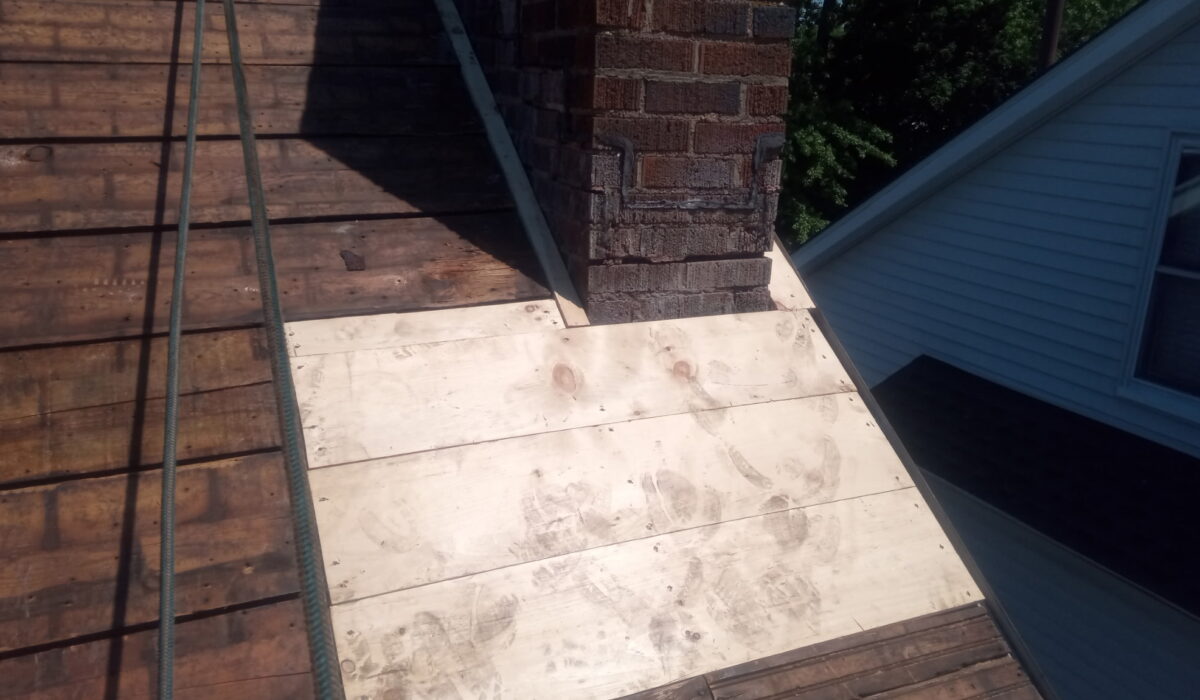
Replacement decking – New plywood or OSB of appropriate thickness is installed with staggered seams, proper gaps, and correct fasteners.
Underlayment and ice barrier – Ice and water shield goes at eaves and vulnerable areas; synthetic underlayment covers the rest. Proper underlayment and moisture protection increase the lifespan of wood-based decking. Vinyl deck membranes also perform well against snow and rain accumulation when professionally installed.
New roofing system – Shingles, flashing, vents, and ridge caps are installed to finish the roof replacement.
Elyria requires a permit for full roof replacements, and Elyria Township has different permit requirements than the city. Most roof replacements in Elyria take one to two days once work starts.
Roof Decking and Northeast Ohio Weather
Elyria sits in Lorain County with a humid continental climate that tests every layer of a roof. The area receives roughly 50–51 inches of snow and 38–39 inches of rain annually, with freeze-thaw cycles running from late fall through early spring. Within 25 miles of Elyria, there have been 42 wind and hail events in the past 12 months, with gusts recorded up to 85 mph.
Roof decking options vary based on climate conditions in Northeast Ohio, and evaluating roofing options should always consider local climate and building codes. Elyria sees hail and wind activity regularly, and storm damage is a common job for local contractors. Architectural shingle roofs last 20 to 25 years in Elyria under normal conditions, but weather can shorten that timeline when damage goes unaddressed.
Weather alone does not ruin decking, but it creates conditions – ice dams, wind-driven rain, heavy snow loads – that exploit weaknesses in shingles or flashing over time. Schedule periodic roof inspections after major storms or once roofs approach 15–20 years old.
Common Roof Areas Where Decking Damage Is Found
Certain spots on Elyria roofs are more prone to water damaged roof decking than others:
Chimneys – Complex flashing and masonry joints make chimneys a top source of chronic leaks and decayed decking.
Valleys – Water concentrates here during rain and snowmelt; any flashing failure quickly damages underlying decking.
Plumbing vents and pipe boots – Cracked or aged rubber boots lead to localized soft roof decking around the penetration.
Skylights – Older or poorly flashed skylights allow water intrusion at corners and lower edges.
Roof-to-wall intersections – Step flashing and counterflashing must be correct; if not, decking along the joint deteriorates.
Roof vents and fan vents – Loose or cracked vents can leak around their bases, damaging small sections of plywood or OSB.
Eaves and overhangs – Ice dams and gutter backups often damage deck boards or sheathing along the lower edges of the roof.
Attic Condensation vs. Roof Leak Damage
Not all roof decking damage comes from exterior leaks. Interior moisture is often to blame, and understanding the difference matters for choosing the right repair approach.
Exterior water – Traditional roof leaks from shingles, flashing, and penetrations usually cause staining and rot that starts from the top side of the decking. These tend to be localized near chimneys, vents, or valleys.
Interior moisture – Warm, humid air from bathrooms, kitchens, and living spaces can rise into the attic and condense on colder surfaces like roof decking during cold Northeast Ohio winters. Local factors such as attic ventilation directly impact the performance of roofing materials in Elyria. Signs of condensation-related damage include:
Frost on the underside of decking in winter
Widespread light staining evenly across the attic side
Mold growth without an obvious roof leak path
Ridge vents, soffit vents, and proper insulation help move moist air out and keep decking drier. Air sealing around light fixtures, attic hatches, and duct penetrations reduces moisture migration. Consider both roof repair and attic improvements when addressing recurring moisture issues.
Can Roof Decking Be Inspected From the Attic?
An attic inspection is valuable but has limitations.
What you can see from the attic:
Water stains, mold, or dark streaks on the underside of decking
Rusted nails or daylight through gaps
Tapping can sometimes identify soft or decayed sections
What you cannot reliably determine:
Nail-holding strength of the panels
Condition of decking hidden under insulation near eaves
Areas blocked by HVAC ducts, framing, or tight spaces
Full confirmation of decking condition requires seeing the top side during tear-off. Allow your roofer access to the attic when possible so both interior and exterior conditions can be evaluated.
What Happens If Bad Roof Decking Isn’t Replaced?
Leaving rotten or structurally unsound decking under a new roof creates problems even if the shingles look fine initially:
Nails may back out or loosen, leading to shingle blow-offs during Lorain County wind events
Damaged decking can crack or flex, allowing water to find its way into the home again
Severely rotted decking cannot safely support foot traffic or snow loads
The longevity of the new roofing system is reduced
Workmanship or manufacturer warranty expectations may not be met
Necessary roof deck repair is part of protecting your home – not an optional upgrade.
What Should Homeowners Ask When a Roofer Says They Need More Plywood?
Use this checklist when a roofing contractor recommends extra plywood replacement during your project:
Where is the damaged decking? Ask for specific locations (e.g., “back left valley near chimney” or “along front eaves”).
Why does it need replacement? Is it rot, delamination, soft spots, or lack of nail-holding strength?
Can you show me photographs? Clear before-and-after photos from the tear-off build trust and help you understand the condition.
Is the damage localized or widespread? Find out if only a few sheets are affected or if problems span large sections.
What caused the deterioration? Was it a long-term leak, attic condensation, storm damage, or prior poor workmanship?
What replacement material and thickness will be used? Choose to clarify whether new decking will be OSB or plywood.
How is additional decking priced? Ask about per-sheet pricing, how many sheets are currently expected, and how changes will be communicated.
Roofing contractors in Elyria document damage for insurance claims, and homeowners often pay only their deductible on approved claims. Work with a roofing company that clearly documents extra decking and updates the written estimate if quantities change.
Working With a Local Elyria Roofing Contractor for Decking Issues
Roof decking concerns connect directly to the broader services Elyria homeowners commonly need – roof repair, full replacement, siding, and ongoing inspections. Choosing a local roofer familiar with Northeast Ohio weather, common housing styles, and typical decking issues in neighborhoods across Elyria, Lorain, North Ridgeville, Amherst, Avon, Sheffield Lake, and Grafton makes a measurable difference.
A thorough roof inspection in Elyria should include checking shingles, flashing, attic ventilation, and visible portions of the deck from both the exterior and attic. Elyria roofing contractors offer free inspections before work starts, and a free inspection is typically offered before roof repairs as well. Reputable Lorain County roofing companies that serve Elyria provide clear written estimates detailing how many sheets of decking are included, how additional sheets are priced, and when the homeowner will be notified.
Look for roofing companies that are fully insured and licensed, document all findings with photos, explain options rather than pressure every customer into full re-decking, and connect with homeowners honestly. If you have noticed sagging, soft spots, or recurring roof leaks, contact a local team to schedule a free inspection or free estimate and determine whether your decking needs attention.
Frequently Asked Questions About Roof Decking in Elyria, Ohio
Does all plywood need to be replaced during a roof replacement?
No. Only rotten, soft, or structurally unsound plywood or OSB should be replaced. Sound decking that holds nails and shows no significant decay can typically stay in place. During roof replacement projects in Elyria, roofers evaluate each sheet after tear-off and replace only the panels that fail basic structural checks. Most roof replacements in Elyria cost between $9,000 and $30,000 depending on the scope, with typical homes running $10,000 to $16,000 and typical Elyria colonial roofs costing around $11,000 to $14,000. Roof replacement costs depend on roof size, pitch, and materials used. Minor roof repairs in Elyria range from $300 to $1,500.
How do I know if my roof decking is rotten before calling a roofer?
Warning signs include sagging rooflines, chronic leaks in the same spots, musty attic odors, and visible staining or mold on decking from the attic. However, definitive diagnosis requires a professional inspection, and many rotten areas are only discovered when the old roof is removed. If you hire a qualified contractor, they will inspect and document every panel once shingles are stripped.
Is OSB acceptable roof decking material in Northeast Ohio?
Yes, OSB is widely used and accepted in Northeast Ohio roofing when it is of appropriate thickness, properly installed, and kept dry. However, plywood resists warping and handles localized moisture better, making it a stronger choice for areas with persistent moisture exposure. The decision should account for your home’s specific conditions. Metal roofs can last over 40 years with minimal maintenance, tile roofs typically cost more than asphalt shingles, and slate roofs are known for lasting a lifetime – but for most Elyria homes with asphalt shingles, the decking beneath matters just as much as the material on top.
Why can’t roofers tell me exactly how many sheets of decking I’ll need before starting?
Until the old shingles and underlayment are torn off, significant portions of the roof decking are hidden. Ethical roofers in Elyria estimate a reasonable range, include per-sheet pricing in their estimates, and then document any additional rotten roof decking discovered during the project with photos and a clear explanation. Many companies carry both plywood and OSB so the crew can address issues as they are found without delaying the job. An insurance claim adjuster may also need this documentation, so ask your contractor about their process for handling an insurance claim if storm damage is involved. Reviews from past homeowners can help you find companies with a track record of honest communication on Friday or any day of the week.
Can attic condensation rot roof decking even without a roof leak?
Absolutely. Warm, humid air entering the attic from the living space below can condense on cold decking surfaces during winter, causing gradual mold growth, staining, and eventually rot from the underside. This pressure of trapped moisture happens without any exterior leak. Proper attic ventilation, insulation, and air sealing are the best defenses. If your bathroom or kitchen exhaust fans vent into the attic instead of outdoors, that alone can account for significant moisture problems and should be corrected. Addressing these issues during a roofing project protects the obligation you have to preserving your home’s structure for years to come.